Creating a simple weekly workout routine does not have to be complicated. In my experience, the biggest mistake beginners make is trying to do too much too quickly. They see advanced workout plans online and think they need to exercise every day for long hours. I believe a better approach is to start with a realistic routine that fits your lifestyle and then improve it slowly.
A good weekly workout routine should help you stay active, build strength, improve fitness, and feel better without making exercise stressful. You do not need expensive equipment or a gym membership to get started. With some planning, you can create an effective workout routine at home or at the gym.
In this article, I will explain how I would create a simple weekly workout routine, especially for beginners who want something practical and easy to follow.
Start With Your Fitness Goals
Before creating a workout schedule, I think it is important to understand what you want to achieve. Everyone has different fitness goals. Some people want to lose weight, while others want to build strength, improve endurance, become more flexible, or simply stay healthy.
Your goal should influence the type of exercise you include in your weekly workout routine.
For example, if your main goal is improving general fitness, you can combine strength training, cardio, walking, and stretching. If you want to build strength, you can focus more on exercises such as squats, push ups, lunges, rows, and other resistance exercises.
I recommend choosing one or two main goals instead of trying to achieve everything at once. A clear goal makes it easier to stay consistent.
Decide How Many Days You Can Exercise
One of the most important steps is choosing a workout schedule that fits your daily life. You should not create a routine based on what someone else is doing.
If you are a beginner, exercising three or four days a week can be a good starting point. You can also include light activities such as walking on your rest days.
For example, you could exercise on Monday, Wednesday, Friday, and Saturday. This gives your body enough time to recover between some workouts.
If you have a busy schedule, even twenty to thirty minutes of exercise can be useful. I would rather complete a short workout consistently than create a long workout plan that I cannot maintain.
Keep Your Weekly Workout Routine Simple
I believe simplicity is one of the keys to consistency. A beginner does not need twenty different exercises in one workout.
A simple workout can include five to seven exercises that target the major muscle groups. You can perform exercises using your body weight or basic equipment.
Some useful beginner exercises include squats, lunges, push ups, glute bridges, planks, jumping jacks, and light dumbbell exercises.
You can also begin each workout with a few minutes of easy movement to prepare your body. After exercising, gentle stretching can help you relax and cool down.
The goal is not to make every workout extremely difficult. The goal is to create a routine that you can continue for weeks and months.
Example of a Simple Weekly Workout Routine
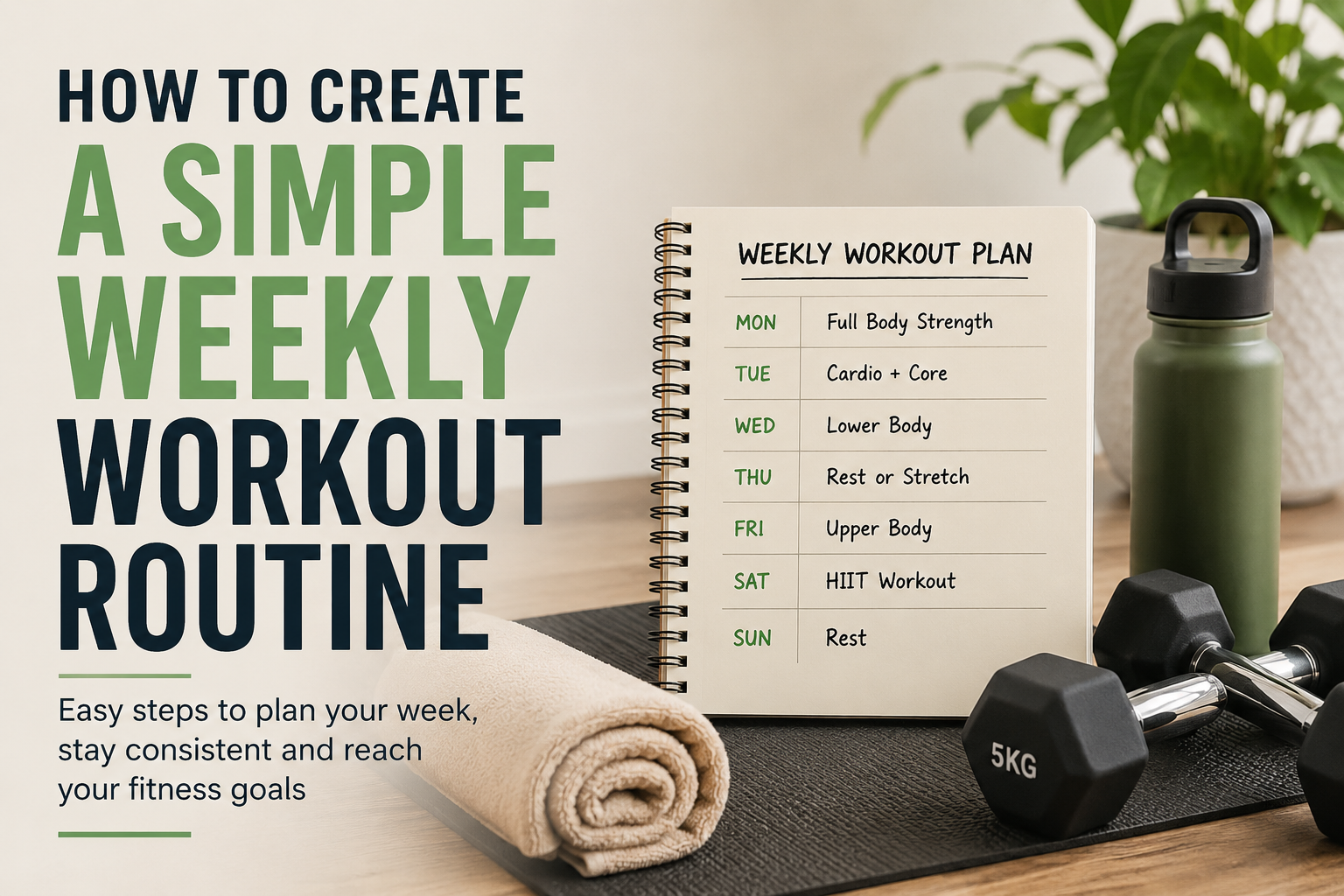
Here is an example of how I would organize a simple weekly workout routine for a beginner.
Monday: Full Body Strength
Start the week with a basic full body workout. You can perform bodyweight squats, push ups, glute bridges, dumbbell rows, and planks.
Try to focus on controlled movements instead of rushing through each exercise. Take enough rest between exercises so that you can maintain good form.
Tuesday: Light Cardio
On Tuesday, you can choose a simple cardio activity. Walking, cycling, swimming, or a beginner cardio workout can work well.
You do not need to exercise at maximum intensity. A comfortable pace that raises your heart rate can be enough for a beginner.
Wednesday: Lower Body Workout
Wednesday can focus on the lower body. You can include squats, lunges, glute bridges, calf raises, and step ups.
If you are new to exercise, start with a small number of repetitions and increase gradually as your fitness improves.
Thursday: Rest or Gentle Activity
Rest is an important part of a workout routine. Your body needs time to recover and adapt to exercise.
On this day, you can completely rest or take a relaxed walk. Gentle stretching can also be helpful if your body feels stiff.
Friday: Upper Body and Core
Friday can focus on the upper body and core. Push ups, dumbbell rows, shoulder presses, and planks are some simple options.
You can modify exercises according to your fitness level. For example, beginners can perform push ups against a wall or on an elevated surface instead of doing traditional floor push ups.
Saturday: Cardio or Fun Activity
I like the idea of making Saturday more enjoyable. Instead of thinking of exercise as a task, choose an activity you actually enjoy.
You could go for a longer walk, ride a bicycle, play a sport, dance at home, or complete a simple cardio workout.
Enjoyable activities can make it easier to stay active over the long term.
Sunday: Rest
Use Sunday as a recovery day. Rest can help your body prepare for another week of exercise.
You can also use this day to review your progress and prepare your workout schedule for the coming week.
Do Not Forget Warm Up and Cool Down
A warm up is something I would always include before a workout. It helps you prepare mentally and physically for exercise.
A simple warm up can include walking in place, arm circles, gentle bodyweight movements, and other easy activities. You can spend around five minutes warming up before beginning your main workout.
After the workout, spend a few minutes slowing down. Gentle stretching can be included as part of your cool down.
The purpose is to transition gradually from exercise back to your normal activities.

Focus on Proper Exercise Form
When creating a weekly workout routine, I think exercise quality is more important than the number of repetitions.
Doing many repetitions with poor form can make an exercise less effective and may increase the chance of discomfort or injury. Start slowly and learn how each movement should be performed.
If you are unsure about an exercise, consider learning from a qualified fitness professional or reliable educational resource.
You should also listen to your body. Normal exercise effort is different from sharp or unusual pain. If something feels wrong, stop the exercise and seek appropriate professional advice.
Increase Your Workout Gradually
Once your routine becomes comfortable, you can gradually make it more challenging.
You might increase the number of repetitions, add another set, increase the resistance, or slightly increase the workout duration.
I would avoid making several changes at the same time. Small improvements are easier to manage and allow you to understand how your body responds.
For example, if you currently perform two sets of squats, you might eventually move to three sets. Later, you could add light resistance.
Progress does not always mean doing more. Sometimes improving your technique or completing the same workout with better control is also progress.
Make Your Routine Fit Your Lifestyle
A workout routine should work with your life instead of fighting against it.
If you prefer exercising in the morning, schedule your workouts before your day becomes busy. If evenings are easier, exercise after work or other responsibilities.
I also recommend preparing your workout clothes and equipment in advance. Small preparations can remove excuses and make exercise easier to start.
If you miss one workout, do not think that your entire week is ruined. Simply return to your routine when you can.
Consistency over time is much more important than having a perfect schedule every week.
Combine Different Types of Exercise
A balanced workout routine can include different types of physical activity.
Strength training can help improve muscular strength. Cardio can support cardiovascular fitness and endurance. Mobility and stretching can help you move comfortably.
You can combine these activities throughout the week instead of trying to complete everything in one session.
For beginners, walking is also an excellent way to become more active. It is simple, accessible, and easy to include in daily life.
Track Your Progress
Tracking your workouts can help you understand whether your routine is working for you.
You can use a notebook, calendar, or simple phone note to record your workouts. Write down the exercises you completed and how you felt.
You can also track improvements such as walking for longer, completing more repetitions, using slightly heavier weights, or feeling more energetic during daily activities.
I believe tracking progress can also provide motivation because sometimes improvements are difficult to notice from day to day.
Give Your Body Enough Recovery
Recovery should never be treated as wasted time. Your body needs rest after challenging workouts.
Sleep, proper nutrition, hydration, and rest days all contribute to recovery. If you constantly feel exhausted, your routine may be too demanding.
A simple weekly workout routine should leave room for recovery. You do not need to exercise intensely every day to make progress.
Stay Consistent Instead of Perfect
For me, consistency is the most important part of creating a workout routine.
You may have weeks when you complete every workout exactly as planned. You may also have busy weeks when you only complete two or three sessions. That is normal.
The important thing is to avoid giving up because of one missed workout.
Think about exercise as a long term habit rather than a short term challenge. When your routine becomes part of your normal lifestyle, staying active becomes much easier.
Final Thoughts
Creating a simple weekly workout routine is easier than many people think. You do not need complicated exercises, expensive equipment, or hours at the gym.
Start by deciding your fitness goals and choosing a realistic number of workout days. Include strength training, cardio, rest, and enjoyable activities. Keep your workouts simple and focus on proper exercise form.
Most importantly, create a routine that you can actually follow. In my opinion, the best workout routine is not the most difficult one. It is the routine that fits your lifestyle and helps you stay consistent.
Start with small steps, give your body time to adapt, and gradually increase the challenge. With patience and regular effort, a simple weekly workout routine can become a healthy habit that supports your fitness goals for years to come.
Disclaimer: This article is for general educational purposes only and is not a substitute for professional medical or fitness advice. If you have a health concern or are unsure whether a particular exercise is suitable for you, consult a qualified professional before starting a new workout program.