Starting beginner strength training at home can be one of the simplest ways to become stronger, more active, and more confident. I personally believe that you do not need an expensive gym membership or a room full of fitness equipment to begin. With a little space, some consistency, and the right exercises, you can create a useful home workout routine that fits easily into your daily life.
Strength training is not only for athletes or people who want to build large muscles. It can be helpful for beginners who simply want to improve their fitness, support everyday movement, and feel stronger. The best part is that you can start with bodyweight exercises and gradually add equipment when you feel ready.
In this guide, I will share practical beginner strength training at home ideas that are easy to understand and simple to follow.
What Is Strength Training?
Strength training is a type of exercise that makes your muscles work against resistance. This resistance can come from your own body weight, resistance bands, dumbbells, or other simple equipment.
For beginners, bodyweight exercises are often enough to build a strong foundation. Exercises such as squats, wall push ups, lunges, glute bridges, and planks can train several important muscle groups without requiring a traditional gym.
I think the most important thing is to focus on learning proper movement rather than trying to lift heavy weights immediately. Good technique gives you a better foundation and helps you become more comfortable with exercise.
Benefits of Beginner Strength Training at Home
There are many reasons to include strength training in a home workout routine. One major benefit is improved muscle strength. Stronger muscles can make everyday activities such as walking, carrying groceries, climbing stairs, and getting up from a chair feel easier.
Regular strength exercises can also support balance and coordination. Another advantage is convenience. When you exercise at home, you do not have to spend time traveling to a gym.
For me, one of the biggest advantages of home workouts is flexibility. You can exercise in the morning, during a lunch break, or in the evening depending on your schedule.
Strength training can also become a useful part of a balanced fitness routine when combined with regular movement, nutritious food, adequate rest, and other forms of exercise.
Start With Bodyweight Exercises
If you are completely new to strength training, I recommend beginning with bodyweight exercises. They allow you to practice basic movement patterns without worrying about equipment.
Here are some beginner friendly exercises to consider.
Bodyweight Squats
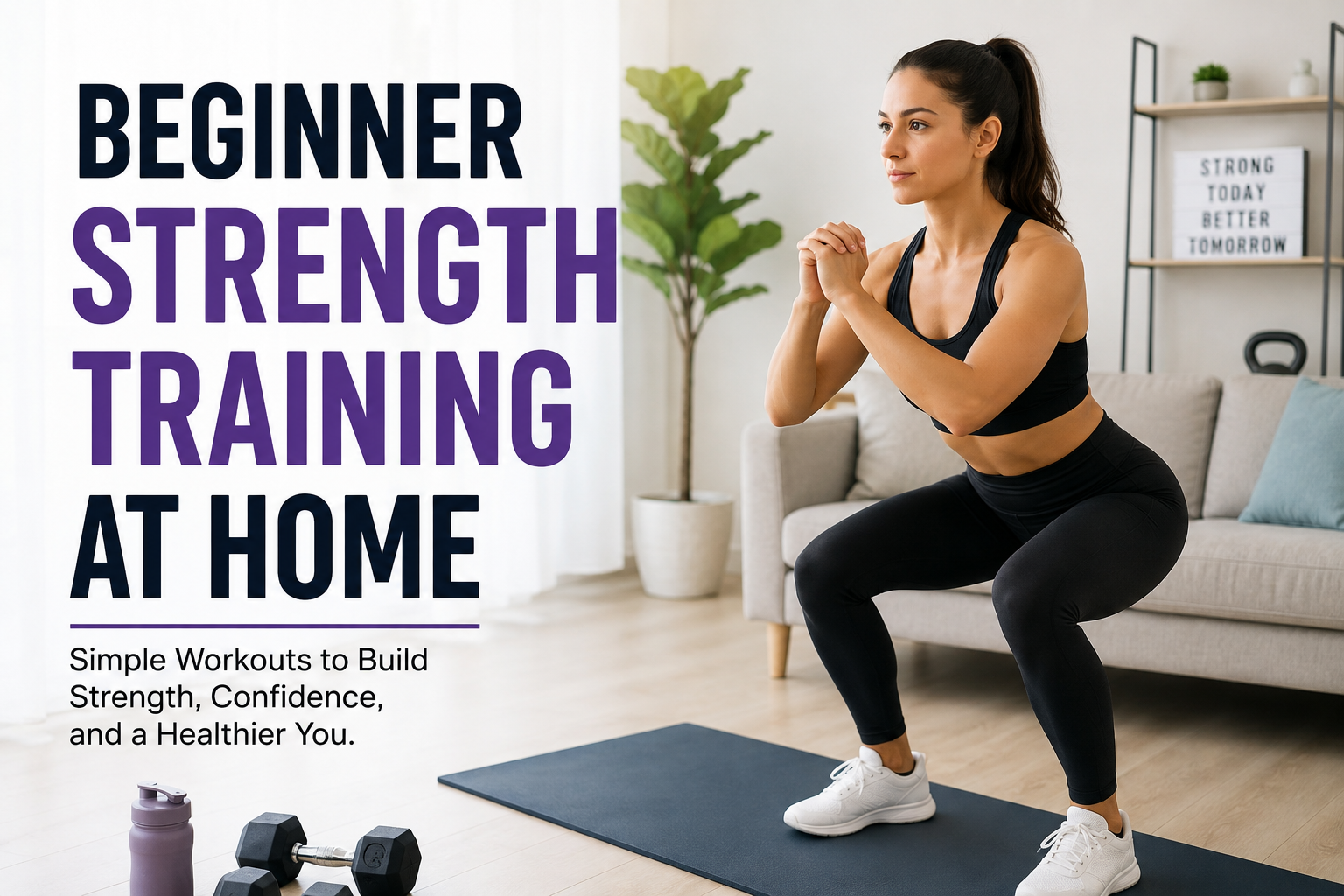
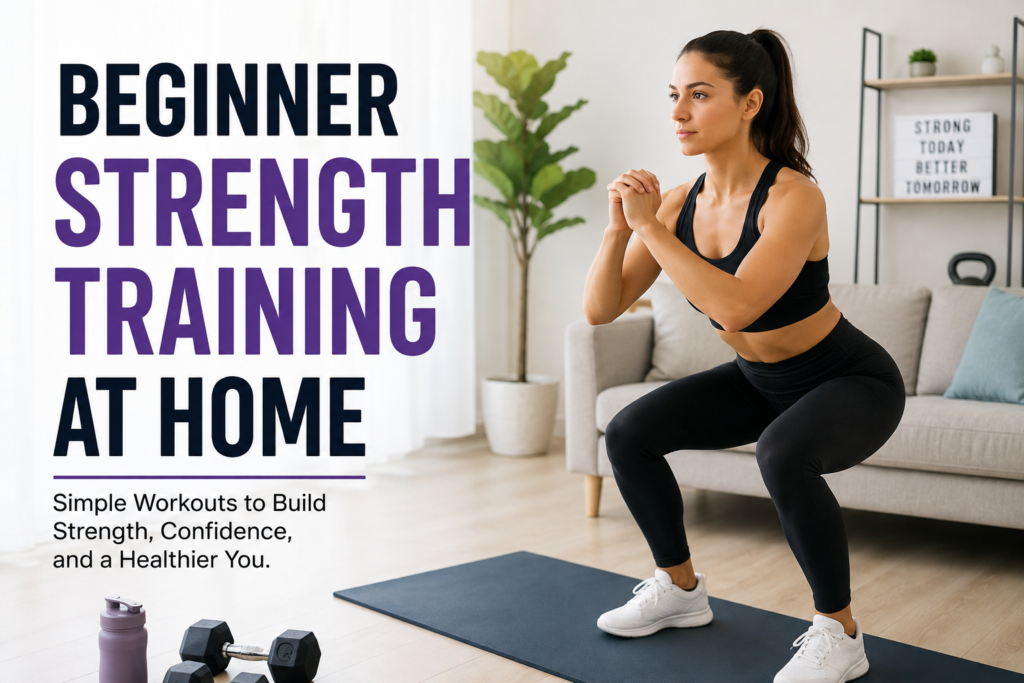
Squats are one of the most useful lower body exercises for beginners. They work muscles around the legs and hips while also helping you practice a movement that you use in everyday life.
Stand with your feet around shoulder width apart. Keep your chest comfortable and lower your body slowly as if you are sitting toward a chair. Then return to the standing position.
Start with a comfortable number of repetitions rather than trying to do as many as possible.
Wall Push Ups
Traditional push ups can feel difficult when you are starting. Wall push ups are a simple alternative.
Stand facing a wall and place your hands against it. Slowly bend your elbows and bring your upper body toward the wall. Then push yourself back.
As you become stronger, you can gradually move toward more challenging push up variations.
Glute Bridges
Glute bridges are a beginner friendly exercise that targets the muscles around the hips and lower body.
Lie on your back with your knees bent and feet comfortably placed on the floor. Slowly lift your hips and then lower them with control.
Focus on smooth movement instead of rushing through repetitions.
Standing Lunges
Lunges can help develop lower body strength and coordination. Beginners can start with a small range of movement and use a wall or sturdy surface for balance if necessary.
Step forward, lower your body comfortably, and return to your starting position. Alternate sides while maintaining control.
Plank
A plank is a simple exercise for practicing core stability. Beginners can start with a short hold and gradually increase the duration as they become more comfortable.
The goal is not to hold the plank for several minutes. Good body position and controlled breathing are more important.
A Simple Beginner Home Workout
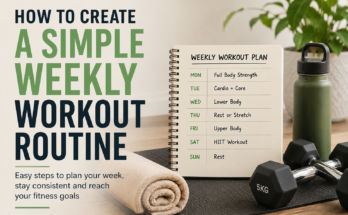
A beginner strength training routine does not need to be complicated. You can begin with a short full body workout two or three times per week.
For example, you could choose bodyweight squats, wall push ups, glute bridges, standing lunges, and a plank.
Perform each movement at a comfortable level and take rest between exercises. If you are new to exercise, start slowly and give yourself enough recovery time.
I prefer simple routines because they are easier to maintain. A workout that you can consistently complete is usually more useful than an extremely difficult routine that you quickly stop doing.
How Many Repetitions Should Beginners Do?
There is no single number that works perfectly for everyone. Your fitness level, age, experience, and exercise selection can all make a difference.
A beginner can start with a manageable number of repetitions and focus on controlled movement. If an exercise feels too easy after several sessions, you can gradually increase repetitions, add another set, or choose a slightly more challenging variation.
The important idea is progressive improvement. You do not need to make huge changes every workout. Small improvements over time can make your routine more effective.
Adding Simple Equipment
Once you feel comfortable with bodyweight exercises, you can consider adding basic equipment.
A pair of light dumbbells can provide additional resistance for exercises such as squats, rows, and presses. Resistance bands are another affordable option and can be useful when you have limited space.
You can also use household items carefully, but I recommend using equipment designed for exercise when possible. Whatever you use, make sure it is stable and appropriate for the movement.
You do not need to buy everything at once. Starting with one simple piece of equipment can be enough.
Focus on Proper Form
One of the most important beginner strength training tips I can give is to learn proper form.
Good form means performing an exercise with controlled movement and appropriate positioning. Avoid rushing through repetitions simply to increase the number.
If you are unsure about an exercise, start with an easier version. You can also consider learning from a qualified fitness professional who can demonstrate safe technique.
During strength training, stop if you experience sharp or unusual pain. Normal muscle effort can feel challenging, but pain should not be ignored.
Warm Up Before Your Workout
A short warm up can help you prepare for exercise. You do not need a complicated warm up at home.
You can spend several minutes walking around, moving your arms, performing gentle bodyweight movements, or doing other comfortable movements that gradually raise your activity level.
The purpose is to prepare your body for the workout rather than exhausting yourself before you start.
Give Your Body Time to Recover
Rest is an important part of beginner strength training. Muscles need time to recover after challenging exercise.
If you train your entire body today, you do not necessarily need to repeat the same demanding workout tomorrow. Give yourself recovery time and pay attention to how your body feels.
Sleep, balanced nutrition, hydration, and regular movement can also support your overall fitness routine.
I have found that consistency becomes much easier when recovery is treated as part of the plan instead of something that is ignored.
Common Beginner Mistakes
One common mistake is trying to progress too quickly. Beginners sometimes believe that harder workouts always produce better results. In reality, doing too much too soon can make exercise unnecessarily difficult.
Another mistake is comparing yourself with people who have been training for years. Your starting point is your own starting point.
Some beginners also skip warm ups, ignore technique, or exercise every day without allowing enough recovery.
Instead, concentrate on gradual progress. Learn the movements, build consistency, and make your workouts slightly more challenging when you are ready.
How to Stay Consistent With Home Workouts
Staying consistent can be harder than starting. This is why I recommend creating a realistic schedule.
Choose specific days and times for your workouts. Keep your exercise area ready and make the routine simple enough that you do not need to spend a lot of time preparing.
You can also track your progress in a notebook or fitness app. Write down the exercises you perform and how they feel. Over time, seeing small improvements can provide extra motivation.
Remember that missing one workout does not mean you have failed. Simply return to your routine when you can.
Beginner Strength Training at Home for Long Term Fitness
The goal of strength training should not be to become perfect immediately. It should be to develop a sustainable exercise habit.
Start with exercises that you can perform safely and comfortably. As your strength improves, gradually increase the challenge.
You might eventually use dumbbells, resistance bands, or more advanced bodyweight exercises. Your routine can change as your fitness level changes.
I believe the best home workout is one that fits your lifestyle. If you can regularly complete a short workout and enjoy the process, you are already building a valuable habit.
Final Thoughts
Beginner strength training at home is a practical way to introduce resistance exercise into your routine without needing a gym. Bodyweight exercises such as squats, wall push ups, glute bridges, lunges, and planks can help you build a strong foundation.
The key is to start slowly, focus on good technique, allow enough recovery, and gradually increase the challenge. You do not need expensive equipment or complicated workouts to get started.
From my point of view, consistency matters more than trying to do everything at once. Make your routine simple, listen to your body, and give yourself time to improve. With patience and regular practice, home strength training can become a positive part of your everyday lifestyle.
If you have an existing injury, medical condition, or specific health concern, consider speaking with an appropriate healthcare or fitness professional before beginning a new exercise program.