When I first started learning about fitness, I thought I needed a gym, expensive equipment, and a complicated workout plan to become stronger. With time, I realized that some of the most useful exercises can be done with nothing more than your own body weight. This is where calisthenics became interesting to me.
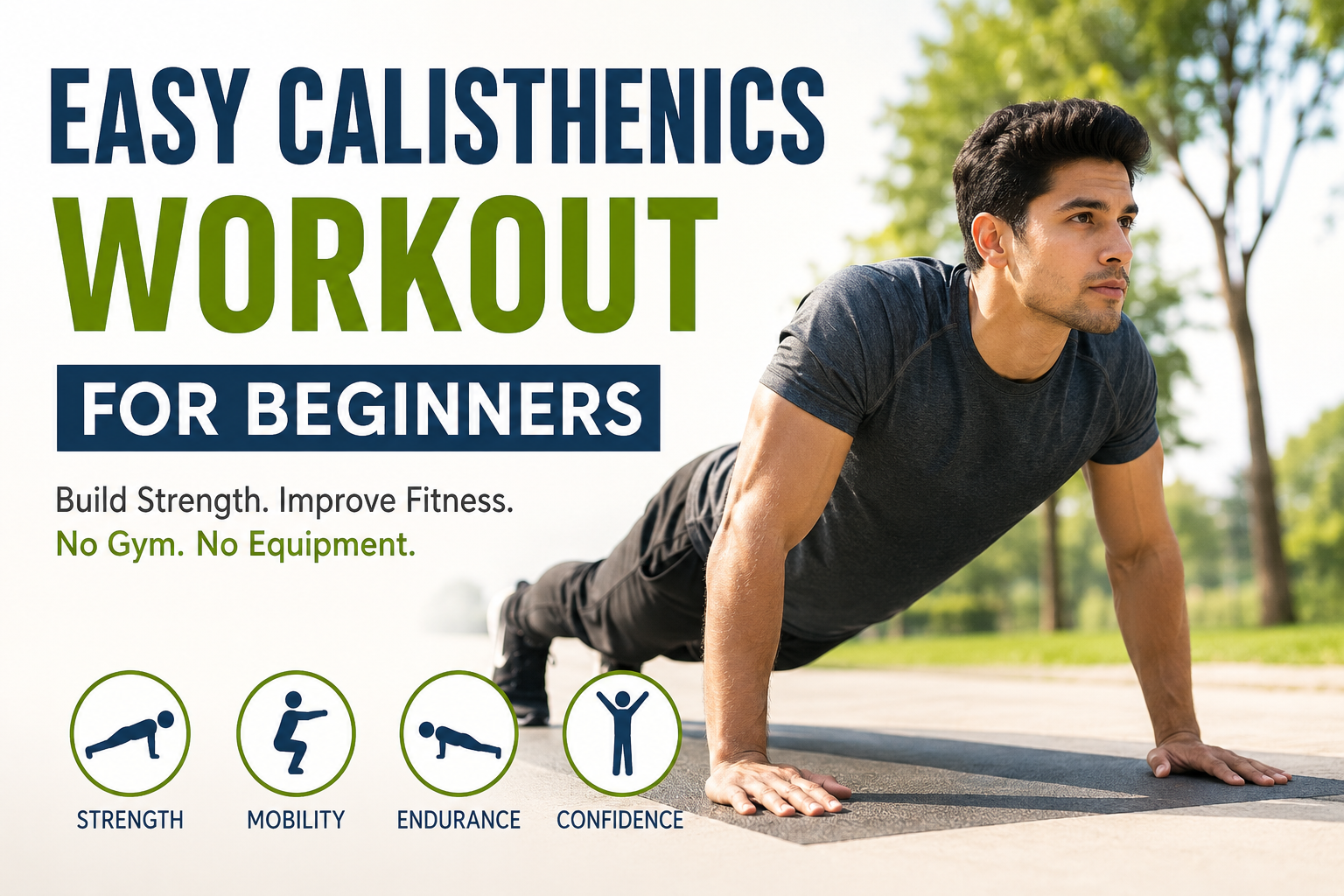
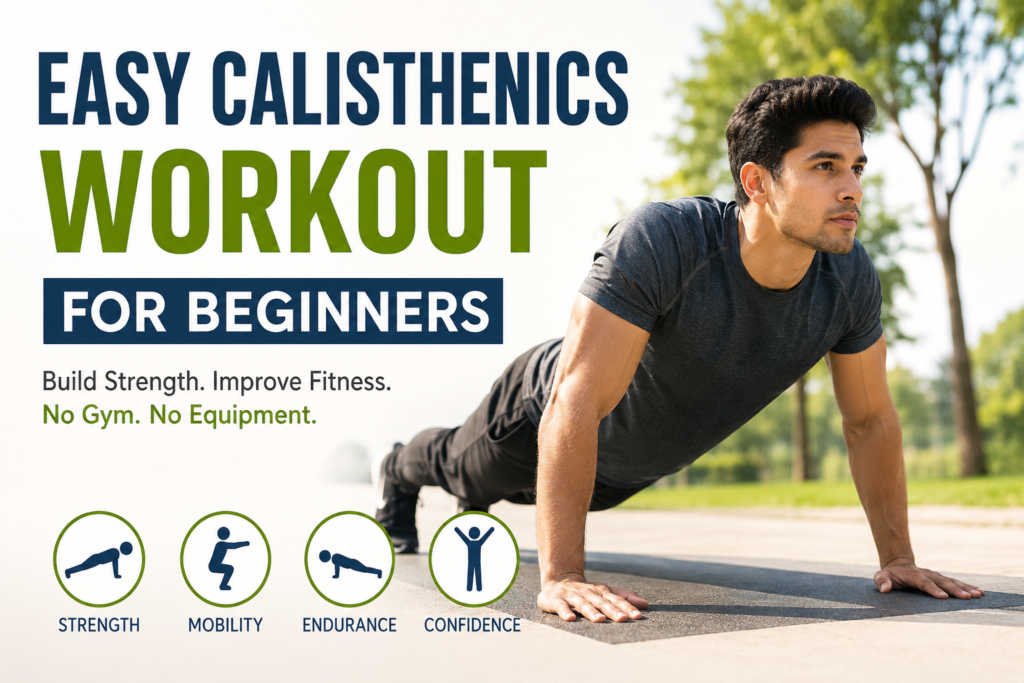
An easy calisthenics workout for beginners is a simple way to improve strength, balance, flexibility, coordination, and general fitness without needing a gym. Calisthenics uses bodyweight exercises such as squats, push ups, lunges, planks, and glute bridges. These movements are easy to understand and can be adjusted according to your fitness level.
If you are completely new to exercise, you do not need to rush. In my opinion, learning proper movement and building consistency is much more important than trying difficult exercises too early.
What Is Calisthenics?
Calisthenics is a form of exercise that mainly uses your body weight for resistance. Instead of depending on machines or heavy weights, you use natural movements to challenge your muscles.
Some common calisthenics exercises include squats, push ups, lunges, planks, mountain climbers, glute bridges, and jumping jacks. As you become stronger, you can gradually move toward more advanced movements.
The best thing about beginner calisthenics workouts is their flexibility. You can exercise at home, in a park, or almost anywhere with enough safe space to move.
Why Calisthenics Is Good for Beginners
I believe calisthenics is one of the easiest ways for beginners to start exercising because the basic movements are familiar and practical.
Bodyweight exercises can help develop functional strength, which means strength that can support everyday activities. Squats can help with movements such as sitting and standing. Lunges can improve lower body control, while push ups can strengthen the chest, shoulders, arms, and core.
Another benefit is convenience. You do not have to travel to a gym or spend money on equipment. You can simply choose a comfortable space and begin.
Calisthenics can also help improve body awareness. As you repeat exercises, you learn how to control your posture, balance, and movement more effectively.
Easy Calisthenics Workout for Beginners
If you are just starting, I recommend keeping your workout simple. The following routine can be completed in about 20 to 25 minutes.
1. Bodyweight Squats
Bodyweight squats are one of my favorite beginner exercises because they work several muscles in the lower body.
Stand with your feet around shoulder width apart. Keep your chest comfortable and your back in a natural position. Slowly bend your knees and lower your hips as far as you can comfortably control. Then push through your feet and return to the starting position.
Start with 2 sets of 8 to 12 repetitions.
Focus on controlled movement instead of trying to squat as quickly as possible.
2. Wall Push Ups
Regular push ups can feel difficult when you are new to exercise. Wall push ups are a useful starting point.
Stand facing a wall and place your hands against it. Keep your body straight and slowly bend your elbows as you bring your chest closer to the wall. Push yourself back to the starting position.
Try 2 sets of 10 to 15 repetitions.
Once you become comfortable, you can progress to incline push ups using a stable elevated surface and eventually regular push ups.
3. Glute Bridges
Glute bridges are simple and effective for beginners. They mainly target the glutes while also involving the muscles around your hips and core.
Lie on your back with your knees bent and your feet flat on the floor. Keep your arms relaxed beside you. Push through your feet and gently raise your hips. Pause briefly at the top and then lower your hips with control.
Try 2 sets of 10 to 15 repetitions.
Avoid using fast movements. The goal is to control the exercise.
4. Reverse Lunges
Reverse lunges are another excellent lower body exercise. I prefer them for beginners because stepping backward can feel easier to control than moving forward.
Stand upright and take one foot backward. Lower your body while keeping control of your movement. Push through the front foot and return to your starting position. Repeat on the other side.
Start with 6 to 10 repetitions on each leg.
If you struggle with balance, hold onto a stable support until you become more comfortable.
5. Forearm Plank
The plank is a simple exercise for developing core endurance.
Place your forearms on the floor and extend your legs behind you. Keep your body in a straight and comfortable position. Tighten your abdominal muscles and avoid allowing your hips to drop too low or rise too high.
Beginners can start with 15 to 20 seconds. Gradually increase the duration as your core becomes stronger.
You do not need to hold a plank for several minutes to make progress. Good form and consistency are more important.
6. Bird Dog
Bird dog is a beginner friendly movement that challenges balance, coordination, and core control.
Start on your hands and knees. Slowly extend one arm and the opposite leg. Keep your body stable and avoid twisting your hips. Return to the starting position and repeat on the opposite side.
Try 6 to 10 repetitions per side.
Move slowly and focus on maintaining control.
7. Jumping Jacks
If your joints are comfortable with light impact, jumping jacks can be a simple way to increase your heart rate.
Stand with your feet together and arms beside your body. Jump while moving your feet outward and raising your arms. Return to the starting position and repeat.
Try 20 to 30 seconds.
If jumping feels uncomfortable, perform a low impact version by stepping one foot out at a time.
A Simple Beginner Workout Schedule
You do not need to perform calisthenics every day. Giving your body time to recover can help you stay consistent.
A simple weekly routine could look like this:
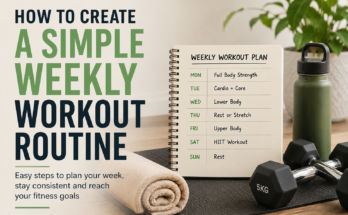
Monday: Beginner calisthenics workout
Tuesday: Light walking or rest
Wednesday: Beginner calisthenics workout
Thursday: Rest or gentle mobility exercises
Friday: Beginner calisthenics workout
Saturday: Light activity such as walking
Sunday: Rest
This is only an example. Your schedule can be adjusted according to your fitness level and daily routine.
How to Warm Up Before Calisthenics
Before starting your workout, spend a few minutes preparing your body. A warm up can include light walking, arm circles, gentle leg movements, and easy bodyweight squats.
I like to keep warm ups simple. The purpose is to gradually prepare your body for exercise rather than exhausting yourself before the workout begins.
Around 5 to 10 minutes of light movement can be enough for many beginners.
How to Progress With Calisthenics
Progress does not always mean doing more repetitions. There are several ways to make a beginner calisthenics workout more challenging.
You can increase repetitions gradually, add another set, improve your range of motion, slow down your movements, or move from an easier variation to a more challenging variation.
For example, your push up progression might start with wall push ups, then incline push ups, then knee push ups, and eventually regular push ups.
The important thing is to progress gradually. Trying advanced exercises before your body is ready can make your workouts unnecessarily difficult.
Common Mistakes Beginners Should Avoid
One mistake I often see beginners make is trying to do too much too soon. They start with a difficult workout, become extremely sore, and then stop exercising for several days.
Another mistake is focusing only on repetitions. Ten controlled squats are more useful for learning movement than rushing through thirty repetitions with poor technique.
Skipping warm ups and recovery can also make a routine harder to maintain. Your workout should fit your current ability instead of being designed around someone else’s fitness level.
Finally, do not compare your progress with other people. Everyone starts from a different point.
Tips for Getting Better Results
Consistency is probably the most important part of any beginner workout routine. You do not need a perfect workout every time. You simply need to keep showing up.
Pay attention to your technique and breathe naturally during each movement. Rest when you need to, especially if you are new to exercise.
Nutrition and sleep also matter. Eating balanced meals, drinking enough fluids, and getting adequate sleep can support your overall fitness routine.
Most importantly, choose exercises that you can perform safely and comfortably. If you have an injury, medical concern, or unusual pain during exercise, consider speaking with a qualified healthcare professional before continuing.
Final Thoughts
An easy calisthenics workout for beginners can be a practical way to start building strength and fitness without a gym or expensive equipment. Exercises such as squats, wall push ups, glute bridges, reverse lunges, planks, bird dogs, and jumping jacks provide a simple foundation.
From my point of view, the biggest advantage of calisthenics is that it makes exercise feel accessible. You can start with a few basic movements, learn proper form, and gradually become stronger.
Do not worry about performing advanced exercises immediately. Start where you are, stay consistent, and allow your fitness level to improve naturally. With patience and regular practice, simple bodyweight exercises can become a strong foundation for a healthier and more active lifestyle.
SEO Keywords: easy calisthenics workout for beginners, beginner calisthenics workout, calisthenics exercises for beginners, beginner bodyweight workout, easy bodyweight exercises, calisthenics workout at home, no equipment workout for beginners, beginner fitness routine