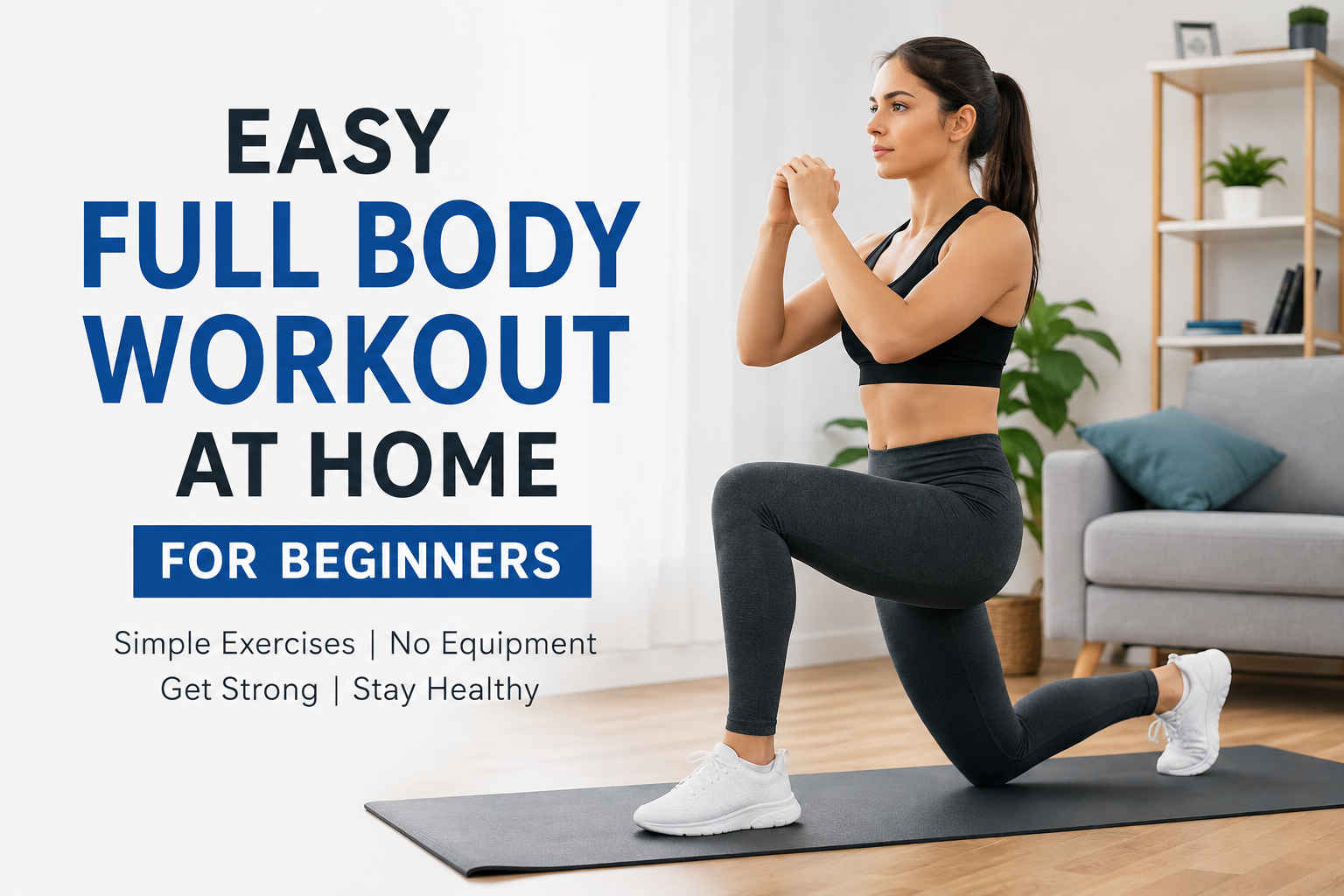
Starting a workout routine can feel difficult when you are new to exercise. I believe the best way to begin is to keep things simple. You do not need an expensive gym membership or complicated equipment to become more active. An easy full body workout at home for beginners can help you build strength, improve fitness, and develop a healthy exercise habit from the comfort of your own home.
When I think about a beginner workout, I focus on exercises that are simple to understand, easy to perform, and suitable for different fitness levels. The goal is not to exercise as hard as possible on the first day. The goal is to move your body consistently and gradually become stronger.
Why Choose a Full Body Workout at Home?
A full body workout targets several major muscle groups during one exercise session. Instead of focusing only on your legs, arms, or stomach, you can work your entire body in a balanced way.
For beginners, this approach can be especially useful because it saves time. You can complete a simple home workout in around 20 to 30 minutes without traveling to a gym.
Working out at home can also make exercise feel more comfortable. You can choose your own time, wear comfortable clothing, and exercise at your own pace. For people who have busy schedules, this flexibility can make it easier to stay consistent.
How Beginners Should Start
Before starting an easy full body workout at home, I recommend beginning slowly. If you have not exercised for a long time, your body may need time to adjust to new movements.
Start with a short warm up for about five minutes. You can walk around your room, move your arms in circles, gently raise your knees, or perform light bodyweight movements.
During your workout, focus on proper form instead of trying to complete a large number of repetitions. Quality movement is more important than speed.
If you experience sharp pain, dizziness, or unusual discomfort, stop exercising and rest. Anyone with an existing medical condition or specific health concern should consider speaking with a qualified healthcare professional before starting a new exercise program.
1. Bodyweight Squats
Bodyweight squats are one of my favorite exercises for beginners because they work the lower body and require no equipment.
Stand with your feet about shoulder width apart. Keep your chest up and your back comfortable. Slowly bend your knees and lower your hips as if you are going to sit on a chair. Go only as low as feels comfortable, then push through your feet to return to the starting position.
Beginners can start with 8 to 12 repetitions. If a full squat feels difficult, you can use a chair behind you for support.
Squats mainly work the legs and hips while also requiring your core to stay engaged.
2. Wall Push Ups
Traditional push ups can be challenging when you are just starting. Wall push ups are a simple alternative.
Stand facing a wall and place your hands against it around chest height. Keep your body straight and slowly bend your elbows to bring your chest toward the wall. Then push yourself back to the starting position.
Try 8 to 12 repetitions at first.
As you become stronger, you can progress to incline push ups using a stable surface and eventually work toward regular push ups.
3. Glute Bridges
Glute bridges are an easy home exercise that targets the hips and glutes while also involving the core.
Lie on your back with your knees bent and your feet flat on the floor. Keep your arms beside your body. Slowly lift your hips toward the ceiling while keeping your feet on the floor. Pause briefly at the top and then lower your hips with control.
Start with 10 to 15 repetitions.
I like this exercise because it is simple and does not require much space. It can also fit easily into a beginner full body workout routine.
4. Standing Knee Raises
Standing knee raises are useful for beginners who want to include more movement in their workout.
Stand tall with your feet comfortably apart. Lift one knee toward your waist while keeping your upper body controlled. Lower it and repeat with the other leg.
Continue alternating sides for 20 to 30 seconds.
If your balance is not strong yet, perform the exercise near a wall or sturdy surface that you can use for support.
5. Bird Dog
The bird dog is a beginner friendly movement that challenges your balance and encourages core control.
Start on your hands and knees. Keep your back in a comfortable neutral position. Slowly extend one arm forward while extending the opposite leg backward. Hold the position briefly, return to the starting position, and switch sides.
Perform 6 to 10 repetitions on each side.
Move slowly rather than trying to complete the exercise quickly. Controlled movement makes this exercise more useful for developing coordination.
6. Standing Calf Raises
Calf raises are extremely simple and can be performed almost anywhere.
Stand upright with your feet about hip width apart. Slowly raise your heels from the floor so you are standing on the balls of your feet. Pause for a moment and then lower your heels.
Try 12 to 15 repetitions.
If you need help with balance, place one hand on a wall or another stable surface.
7. Plank on Knees
A traditional plank can be difficult for beginners, so starting with a knee plank can be a better option.
Place your forearms on the floor and keep your knees on the ground. Position your body in a straight line from your head toward your knees. Tighten your stomach gently and hold the position while breathing normally.
Start with 15 to 20 seconds. Over time, you can gradually increase the duration.
The main goal is to keep your body controlled rather than holding the position for as long as possible.
A Simple Beginner Workout Routine
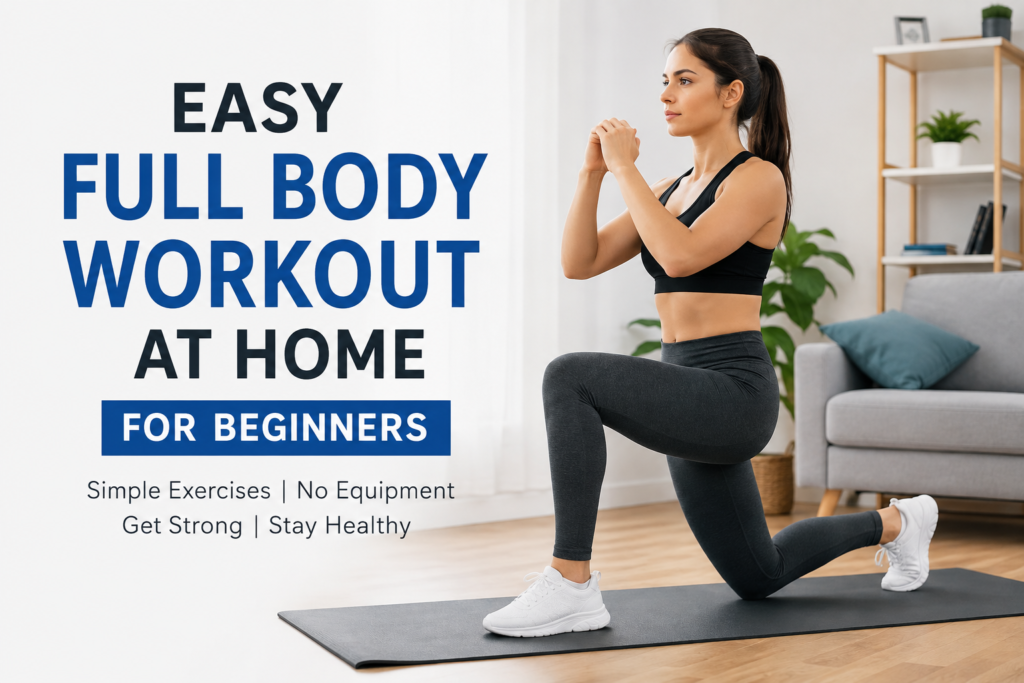
You can combine these exercises into a straightforward full body workout at home.
Start with five minutes of light warm up.
Then perform:
10 bodyweight squats
10 wall push ups
12 glute bridges
20 seconds of standing knee raises
8 bird dogs on each side
15 calf raises
15 seconds of knee plank
Rest for about 30 to 60 seconds between exercises when needed. Beginners can complete one round at first. As their fitness improves, they can gradually work toward two or three rounds.
There is no need to rush. Consistency is more important than doing a very long workout once and then stopping for several days.
How Often Should Beginners Work Out?
For beginners, three workout sessions per week can be a practical starting point. You can leave a rest day between workouts to allow your body to recover.
For example, you might exercise on Monday, Wednesday, and Friday. On the other days, you can focus on normal daily movement, gentle walking, or rest depending on how you feel.
As your fitness improves, you can gradually increase your activity. Remember that recovery is also part of a successful workout routine.
How to Make Home Workouts More Effective
One mistake I often see beginners make is trying to change everything at once. You do not need to perform advanced exercises immediately.
Instead, focus on small improvements.
You can add a few repetitions, increase your workout time slightly, improve your technique, or reduce your rest periods as you become more comfortable.
Another important factor is consistency. A 20 minute workout that you actually complete three times a week is usually more useful for building a routine than a very difficult workout that you only perform occasionally.
Creating a specific workout time can also help. Some people prefer exercising in the morning, while others find it easier in the evening. Choose the time that fits naturally into your schedule.
Do You Need Equipment?
One of the biggest advantages of this beginner home workout is that you can perform it without special equipment.
Bodyweight exercises use your own body as resistance. A chair or wall may provide optional support for certain beginner movements, but you do not need expensive machines or weights to get started.
Later, if you enjoy exercising at home, you may decide to add resistance bands, dumbbells, or other equipment. However, equipment is not necessary for building the basic habit of regular exercise.
Common Beginner Mistakes
Beginners sometimes make the mistake of exercising too intensely too soon. This can make the workout unnecessarily difficult and may reduce motivation.
Another common mistake is ignoring technique. Fast repetitions are not always better. Slow and controlled movements can help you understand how each exercise works.
Skipping the warm up is another habit worth avoiding. A few minutes of gentle movement can help prepare your body for exercise.
Finally, do not compare your progress with someone else’s. Everyone starts from a different fitness level. Your goal should be to improve your own strength, movement, and consistency.
Benefits of a Regular Full Body Workout
Regular physical activity can support overall fitness and make everyday movements feel easier. Strength exercises can help develop muscular strength, while active movement can contribute to cardiovascular fitness and general physical wellbeing.
A consistent workout routine can also give you a sense of accomplishment. Personally, I think this is one of the most important benefits for beginners. When you keep a simple promise to yourself and complete your workouts regularly, exercise can gradually become a normal part of your lifestyle.
Final Thoughts
An easy full body workout at home for beginners does not need to be complicated. With simple exercises such as squats, wall push ups, glute bridges, knee raises, bird dogs, calf raises, and beginner planks, you can create a practical routine without expensive equipment.
The most important thing is to start at a comfortable level and progress gradually. Focus on proper form, give your body enough recovery time, and try to stay consistent.
In my view, the best beginner workout is the one you can actually enjoy and continue. Start with a few exercises, listen to your body, and build your routine one step at a time. With patience and consistency, your simple home workout can become a strong foundation for a healthier and more active lifestyle.