Starting exercise can feel difficult when you have never followed a workout routine before. I understand that feeling because getting started is often harder than the exercise itself. Many beginners think they need expensive gym equipment, a large workout space, or hours of free time. In my experience, none of these things are necessary. You can start exercising at home with simple movements, a little space, and a realistic routine.
Exercising at home is one of the easiest ways to make physical activity part of your daily life. You do not have to travel to a gym, wait for equipment, or worry about what other people think. You can exercise at a time that works for you and slowly build your fitness level.
In this guide, I will explain how to start exercising at home for beginners, what exercises you can try, how long you should exercise, and how to stay consistent without making your routine complicated.
Why Start Exercising at Home?
For beginners, home workouts offer a comfortable way to become more active. When I first think about building a fitness habit, convenience is one of the most important things. If your workout is easy to access, you are more likely to do it regularly.
You can exercise in your bedroom, living room, balcony, or any safe area where you have enough space to move. You may only need a comfortable pair of shoes and a workout mat. Some exercises can even be performed without equipment.
Another benefit is flexibility. If you have only 15 or 20 minutes available, you can still complete a short workout. You do not need to wait until you have a completely free hour.
Regular physical activity can also support overall fitness, strength, mobility, balance, and energy. The important thing is to start at a level that feels manageable.
Set a Simple Goal
Before starting your home workout routine, I recommend choosing one simple goal. Do not try to change everything at once.
Your goal could be exercising three days a week, walking for 20 minutes each day, improving your strength, or simply becoming more active.
A realistic goal gives you something to work toward without creating unnecessary pressure. When you are a beginner, consistency matters more than doing difficult workouts.
For example, instead of saying, “I will exercise for one hour every day,” you could start with, “I will exercise for 20 minutes three times this week.”
Once that becomes comfortable, you can gradually increase your workout time.
Create a Small Workout Space
You do not need a home gym to exercise at home. I prefer keeping things simple. Find an area where you can comfortably stand, stretch, and move your arms and legs.
Remove objects that could cause you to trip. Make sure the floor is stable and that there is enough room around you.
A workout mat can make exercises such as stretching, floor exercises, and bodyweight movements more comfortable. However, a mat is not essential if you already have a suitable surface.
Keeping your workout space ready can also make exercising easier because you spend less time preparing.
Start With a Warm Up
One mistake beginners sometimes make is starting intense exercise immediately. I recommend beginning every workout with a gentle warm up.
A warm up prepares your body for movement and helps you transition from rest to exercise.
You can spend five to ten minutes doing simple movements such as walking in place, shoulder circles, arm swings, gentle leg movements, and slow bodyweight squats.
Your warm up should feel easy. The purpose is to gradually increase movement rather than make yourself tired before the workout begins.
Try Simple Beginner Exercises
You can build an effective beginner home workout using basic bodyweight exercises. These exercises do not require complicated equipment.
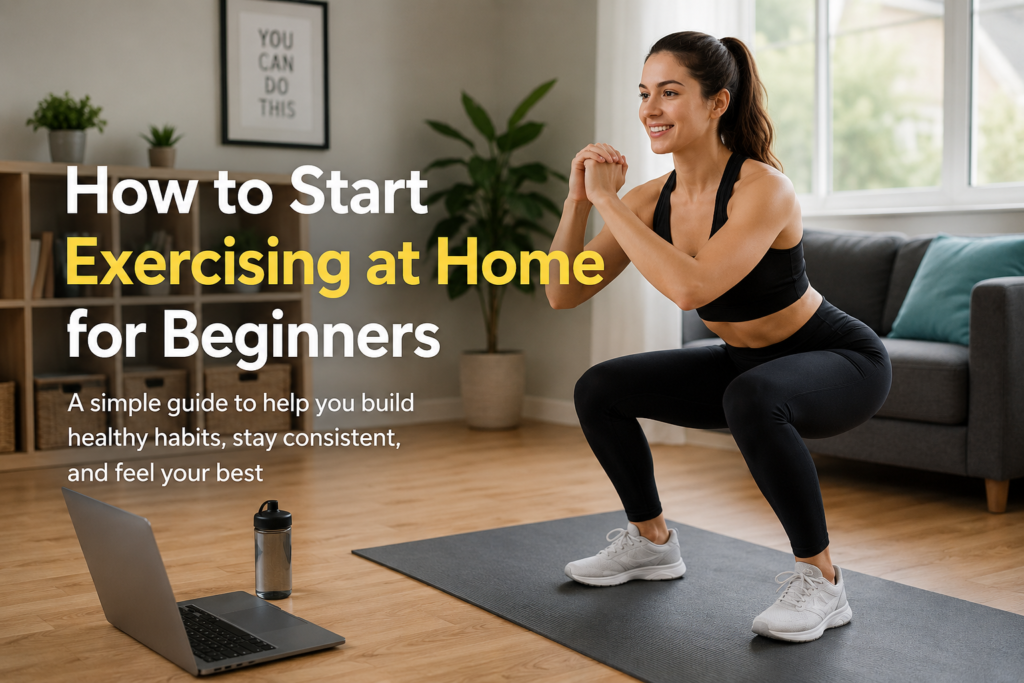
Bodyweight Squats
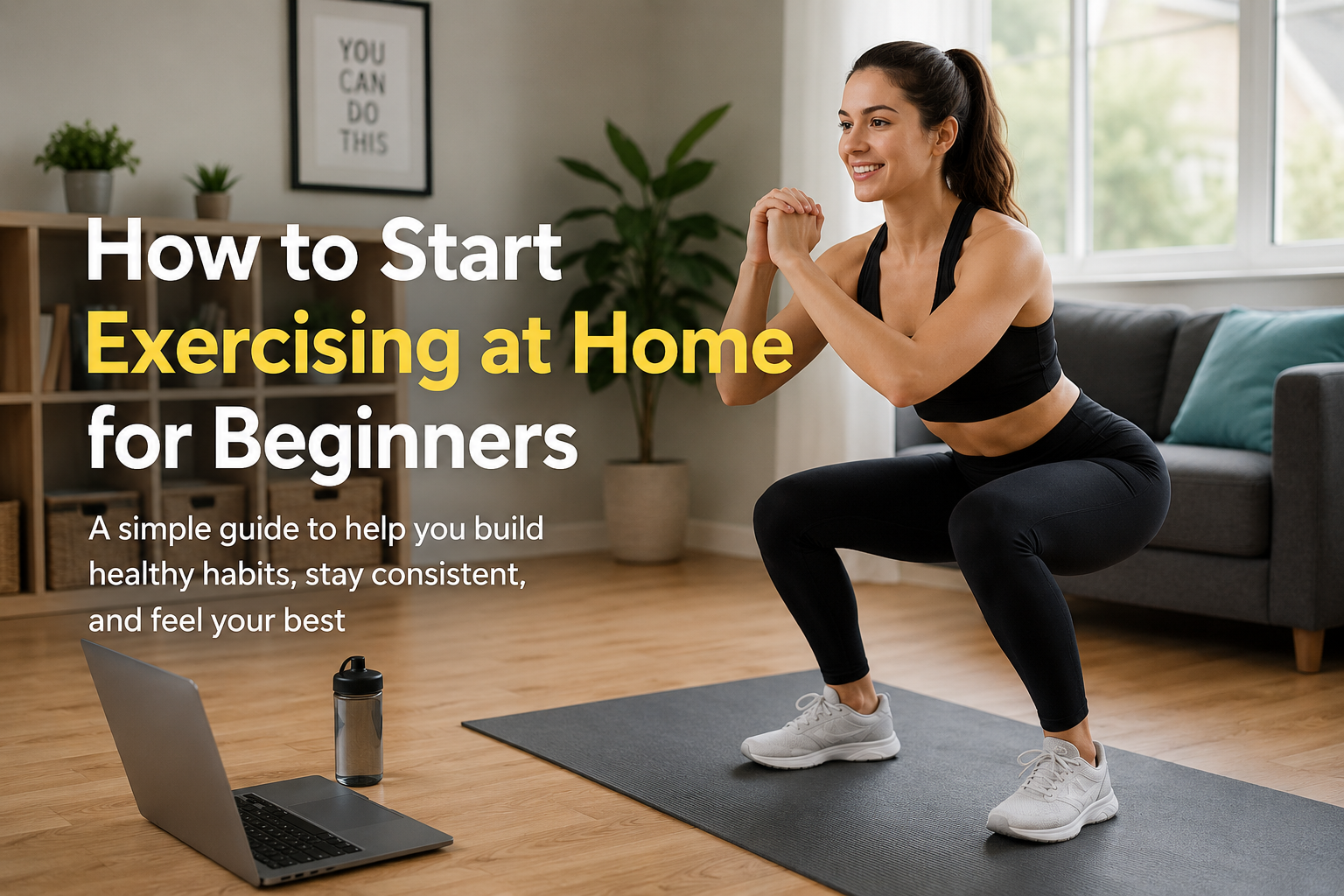
Squats are a simple exercise that works several muscles in the lower body.
Stand with your feet approximately shoulder width apart. Keep your chest comfortable and slowly bend your knees and hips as if you were sitting in a chair. Then return to the standing position.
Start with 8 to 10 repetitions. Focus on controlled movement instead of trying to complete as many repetitions as possible.
Wall Push Ups
If regular push ups feel too difficult, wall push ups are a good beginner option.
Stand facing a wall and place your hands against it. Keep your body straight and slowly bend your elbows to move closer to the wall. Then push yourself back.
This exercise can help beginners become comfortable with the pushing movement before progressing to more challenging variations.
Glute Bridges
Glute bridges are performed on the floor and focus on the muscles around the hips and lower body.
Lie on your back with your knees bent and your feet resting on the floor. Slowly lift your hips while keeping your movement controlled. Lower your hips back down and repeat.
Start with around 8 to 12 repetitions.
Marching in Place
Marching in place is an easy way to add movement and light cardiovascular exercise to your home workout.
Stand upright and gently lift one foot and then the other. Move your arms naturally as you march.
You can do this for one or two minutes and gradually increase the time as your fitness improves.
Bird Dog
The bird dog is a beginner friendly movement that challenges balance and body control.
Start on your hands and knees. Slowly extend one arm and the opposite leg while keeping your body stable. Return to the starting position and switch sides.
Move slowly and focus on maintaining control.
How Long Should Beginners Exercise?
There is no need to start with long workouts. In my opinion, a short workout that you actually complete is much better than a long workout that you keep postponing.
A beginner can start with around 15 to 20 minutes of exercise. You can gradually increase your workout duration as your body becomes more comfortable with physical activity.
You might begin with three home workouts per week and include light walking or gentle movement on other days.
Your routine does not have to be perfect. The main goal is to create a habit that you can maintain.
Make Progress Slowly
One of the most important things I would tell a beginner is not to rush.
You may feel motivated during your first few workouts and want to exercise every day. However, your body needs time to adapt to new physical activity.
Start with manageable exercises and gradually increase repetitions, duration, or difficulty.
For example, if you comfortably perform 8 squats during your first week, you might try 10 or 12 later. Small improvements can add up over time.
Progress is not always about doing more. Improving your technique, balance, control, and consistency can also be meaningful progress.
Listen to Your Body
Exercise should challenge you, but you should also pay attention to how your body feels.
Normal effort can include feeling your muscles working and breathing faster. However, sharp pain, severe dizziness, chest pain, or unusual symptoms should not be ignored.
If you have an existing medical condition, an injury, or concerns about whether exercise is appropriate for you, it is sensible to speak with a qualified healthcare professional before starting a new exercise program.
For beginners, the goal should be safe and sustainable exercise rather than pushing through pain.
Stay Consistent With Your Home Workout Routine
Motivation can change from day to day. That is why I believe creating a simple routine is more useful than depending entirely on motivation.
Choose specific days and times for your workouts. For example, you could exercise on Monday, Wednesday, and Friday.
You can also put your workout clothes somewhere visible or prepare your workout area in advance.
Another useful approach is to keep track of your workouts. Write down the exercises you complete and how you feel afterward. Seeing your progress can make it easier to continue.
If you miss one workout, do not assume that you have failed. Simply return to your routine at the next opportunity.
Keep Your Home Workouts Interesting
Doing the same exercises every day can become boring. Once you feel comfortable with your routine, you can introduce different activities.
You might try beginner yoga, dancing, walking, stretching, bodyweight strength exercises, or low impact cardio.
I find that variety can make exercise feel less like a task and more like something enjoyable.
You can also choose music that makes your workout more enjoyable, as long as it does not distract you from exercising safely.
Common Beginner Mistakes to Avoid
One common mistake is trying to do too much too soon. Your first workout does not need to be extremely difficult.
Another mistake is focusing only on weight loss. Exercise can provide many benefits beyond changes in body weight, including improved strength, movement, fitness, and daily energy.
Skipping warm ups, using poor technique, and ignoring pain are also habits worth avoiding.
Most importantly, do not compare your progress with someone who has been exercising for years. Your fitness journey is your own.
A Simple Beginner Home Workout
If you want a basic routine to get started, you can try this structure:
Start with five minutes of gentle warm up.
Then perform 8 to 10 bodyweight squats.
Follow with 8 to 10 wall push ups.
Complete 8 to 12 glute bridges.
March in place for one to two minutes.
Finish with gentle stretching and slow breathing.
Rest when needed and keep the movements controlled. As your fitness improves, you can gradually increase the duration or repetitions.
Final Thoughts
Learning how to start exercising at home for beginners does not have to be complicated. In my view, the best workout routine is one that fits naturally into your lifestyle and that you can continue over time.
You do not need expensive equipment or a perfect home gym. Start with simple exercises, short workouts, and realistic goals. Give your body time to adapt and focus on building consistency.
Some days will be easier than others, and that is completely normal. What matters is continuing to make an effort.
If you are just beginning, start small today. Even a short period of movement can be a positive first step toward creating a healthier and more active routine.