Eating healthy does not always have to be complicated. In my experience, one of the easiest ways to improve your diet is to learn how to build a balanced meal at home. When I prepare food myself, I have more control over the ingredients, portion sizes, cooking methods, and overall quality of the meal. I also find that homemade meals can be simple, affordable, and enjoyable when I follow a few basic principles.
A balanced meal should give your body a combination of protein, carbohydrates, healthy fats, vegetables, and important vitamins and minerals. The goal is not to make every meal perfect. Instead, I believe the most useful approach is to create meals that contain a variety of nutritious foods and keep the portions reasonable.
In this article, I will explain how I approach building a balanced meal at home and share practical ideas that can make healthy eating easier.
Start With a Good Source of Protein
The first thing I consider when preparing a balanced meal is protein. Protein is important because it helps support muscles, keeps us satisfied after eating, and plays a role in many functions throughout the body.
There are many protein choices, so you do not have to eat the same foods every day. Chicken, fish, eggs, beans, lentils, yogurt, cottage cheese, and lean meat can all be useful choices. For people who prefer plant based meals, beans, lentils, chickpeas, tofu, and other plant foods can provide protein.
For example, when I prepare lunch, I might choose grilled chicken as my main protein. On another day, I may use lentils or eggs instead. Changing the protein source keeps meals interesting and gives the diet more variety.
I also prefer cooking protein with simple methods such as grilling, baking, boiling, or lightly sautéing rather than relying on heavy frying.
Add Plenty of Vegetables
Vegetables are one of the most important parts of a balanced meal. They provide fiber, vitamins, minerals, and many other nutrients that support overall health.
When I build a meal at home, I try to include at least one or two types of vegetables. If possible, I add several different colors because this naturally increases the variety of foods on my plate.
Broccoli, carrots, spinach, tomatoes, cucumber, bell peppers, cabbage, cauliflower, peas, and green beans are all easy options. Fresh vegetables are great, but frozen vegetables can also be convenient when fresh produce is not available.
I find that vegetables do not need complicated recipes. A simple salad with cucumber, tomato, onion, and leafy greens can work well. Steamed broccoli or cooked carrots can also make a meal more filling and nutritious.
Choose Healthy Carbohydrates
Carbohydrates often get misunderstood, but I believe they can be an important part of a balanced meal. The key is choosing nutritious carbohydrate sources and paying attention to portions.
Rice, potatoes, oats, whole grain bread, whole grain pasta, corn, beans, and other grains can provide energy. Whenever possible, I choose whole or minimally processed options because they can provide more fiber and nutrients.
For example, instead of making a plate mostly rice, I prefer combining a moderate portion of rice with protein and plenty of vegetables. This creates a more balanced meal and helps prevent one food group from taking over the entire plate.
The right portion can vary depending on a person’s age, activity level, goals, and individual needs. There is no single portion size that works for everyone.
Include a Source of Healthy Fat
Healthy fats are another useful part of a balanced meal. They can help make food more satisfying and can support normal body functions.
Some foods that provide healthy fats include nuts, seeds, avocados, olives, and certain cooking oils. Fish can also provide beneficial fats.
When I use oil for cooking or dressing a salad, I try to use a reasonable amount rather than adding too much. A small amount of olive oil, for example, can add flavor without making the meal unnecessarily heavy.
Nuts and seeds are also easy additions. A small serving of almonds, walnuts, or seeds can add texture and flavor to a meal.
Think About Portion Balance
Building a balanced meal is not only about choosing healthy foods. Portion balance matters too.
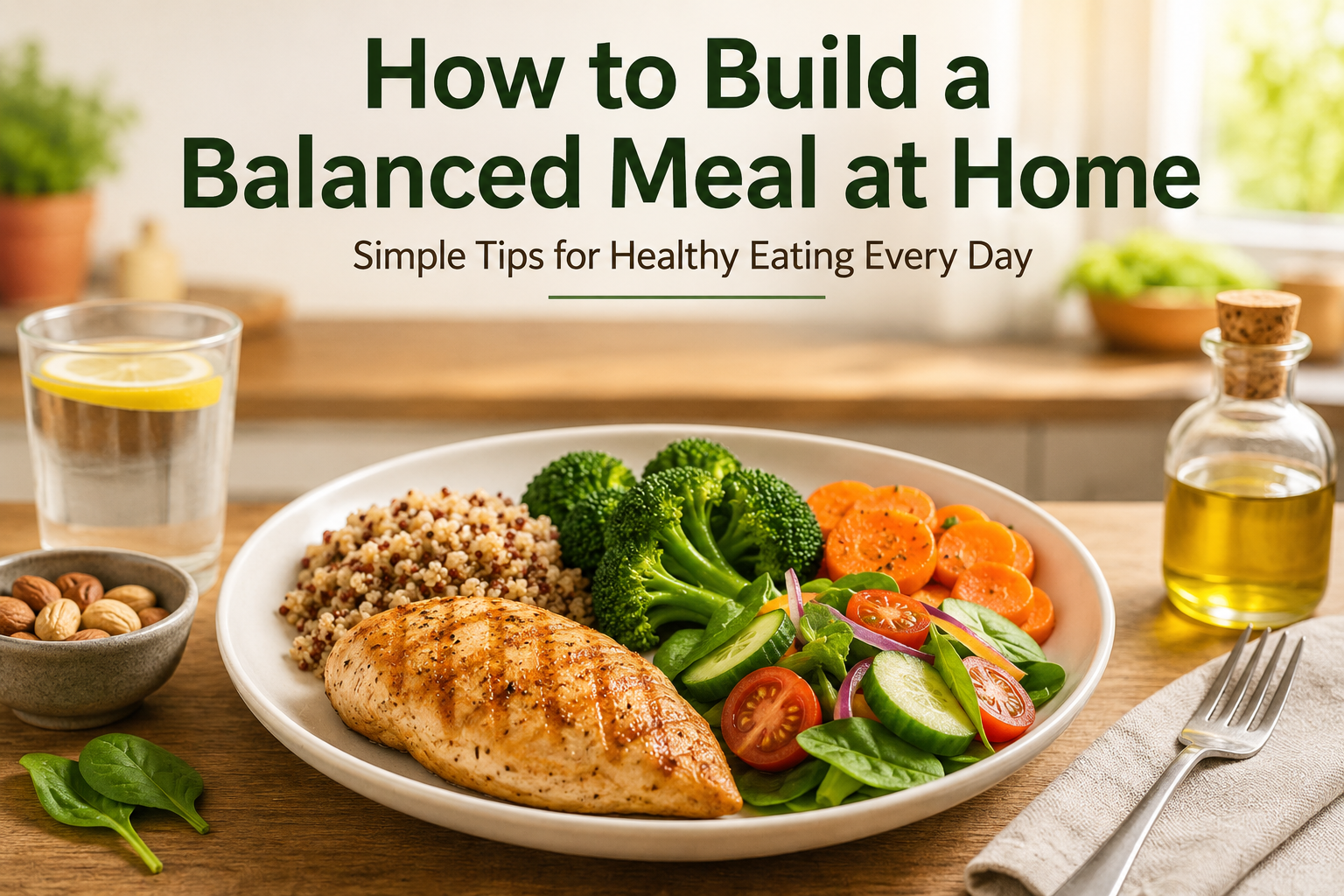
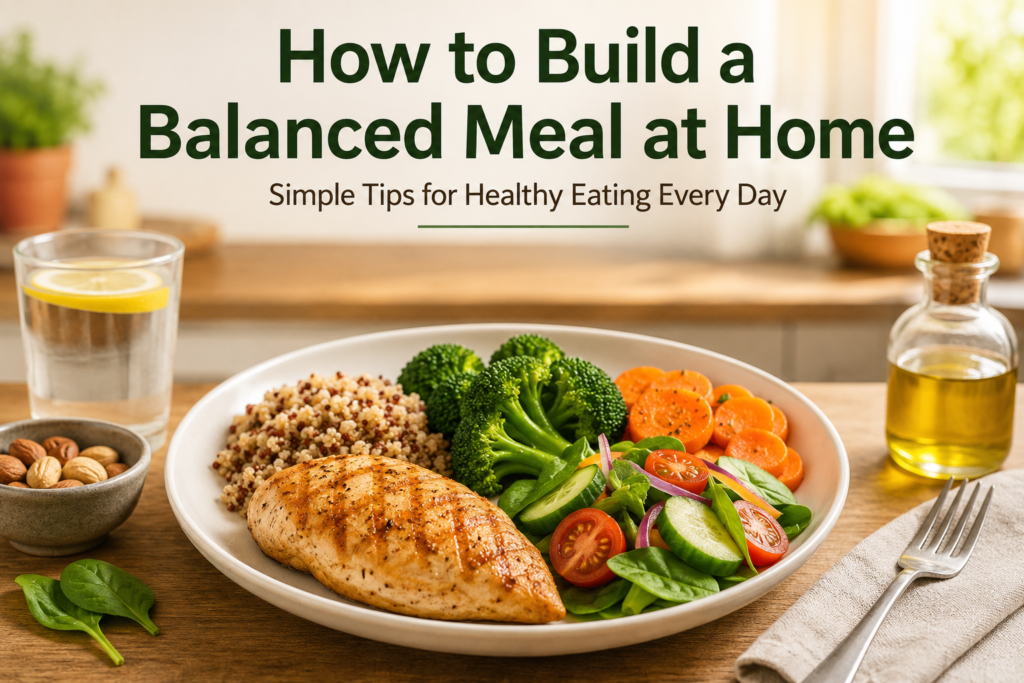
One simple method I like is to imagine dividing the plate into sections. About half of the plate can be vegetables, while the remaining space can be divided between protein and a carbohydrate source. A small amount of healthy fat can then be added.
This is not a strict rule. Some people may need larger portions of certain foods depending on their lifestyle and nutritional needs. However, this approach gives me a simple visual guide when I am unsure how much of each food to serve.
The main idea is to avoid making the entire meal about one ingredient. A plate filled mostly with rice, bread, or meat may not provide the same variety as a meal containing vegetables, protein, carbohydrates, and healthy fats.
Do Not Forget Fiber
Fiber is another important part of a healthy eating pattern. Vegetables, fruits, beans, lentils, whole grains, nuts, and seeds can all contribute fiber to the diet.
I find that meals containing fiber are often more satisfying. For example, adding vegetables and beans to a rice meal can make it more nutritious and filling.
Increasing fiber gradually and drinking enough water can also be helpful for digestion. Instead of suddenly changing everything I eat, I prefer making small improvements over time.
Add Fruit When Appropriate
Fruit can be a simple way to add natural sweetness, fiber, vitamins, and minerals to your day. Depending on the meal, fruit can be served as a side dish, snack, or dessert.
Apples, bananas, oranges, berries, mangoes, pears, and melons are easy choices. I often prefer whole fruit instead of relying on fruit drinks because whole fruit also provides fiber.
For breakfast, fruit can be combined with yogurt and oats. After lunch, an apple or orange can be a simple dessert. These small choices can make a regular meal more enjoyable.
Keep Cooking Simple
One reason people struggle with healthy eating is that they think every meal needs to be complicated. I do not agree with that idea.
Some of my favorite balanced meals are very simple. Grilled chicken with rice and vegetables is one example. Another option is lentils with vegetables and whole grain bread. Eggs with vegetables and toast can also work well for breakfast.
The goal is to create meals that you can realistically prepare on a regular basis. If a recipe requires too many ingredients or takes too much time, it may become difficult to maintain.
Simple cooking methods such as baking, grilling, steaming, boiling, and light sautéing can make healthy meal preparation easier.
Plan Your Meals Before You Get Hungry
Meal planning can make a big difference. When I decide what I am going to eat before I become extremely hungry, I usually make better choices.
You do not need to plan every meal for an entire month. Even planning a few meals for the next several days can help.
I like to think about the main protein, carbohydrate, and vegetables I already have at home. From there, I can create several different meals without buying unnecessary ingredients.
For example, cooked chicken can be used in a rice bowl one day and a salad the next day. Cooked beans can be added to vegetables, rice, or whole grain bread. Preparing a few basic ingredients in advance can save time during busy days.
Make Water Your Main Drink
A balanced meal also includes what you drink. Water is usually a simple choice for staying hydrated without adding unnecessary sugar.
I try to keep water available during meals instead of automatically choosing sugary drinks. Unsweetened tea can also be an option for many people.
This does not mean you can never enjoy other beverages. My main focus is simply making water the regular choice.
Make Healthy Eating Practical
For me, the biggest lesson about balanced eating is that consistency matters more than perfection. You do not have to prepare a perfect meal every time.
Some days will be busy. Sometimes you may eat outside the home. Sometimes your meal may contain more of one food group than another. That is normal.
Instead of feeling guilty about one meal, I believe it is better to focus on your overall eating pattern. If most of your meals contain nutritious and varied foods, you are already moving in a positive direction.
Easy Balanced Meal Ideas
If you need inspiration, there are many combinations you can make at home.
Grilled chicken, brown rice, broccoli, and a small salad can make a satisfying lunch or dinner.
Lentils, vegetables, whole grain bread, and plain yogurt can provide another balanced option.
For breakfast, eggs with whole grain toast, tomatoes, spinach, and fruit can be simple and filling.
A bowl containing yogurt, oats, fruit, nuts, and seeds can also work well when you want something quick.
These meals do not require expensive ingredients. You can adjust them based on your budget, food preferences, and what is available locally.
Final Thoughts
Learning how to build a balanced meal at home can make healthy eating much easier. In my opinion, the best approach is to keep things simple and focus on variety. Start with a good source of protein, add plenty of vegetables, choose a nutritious carbohydrate, include a small amount of healthy fat, and remember to drink enough water.
You do not need expensive foods, complicated recipes, or a perfect diet to make progress. Small changes can become useful habits when you repeat them consistently.
When I prepare meals at home, I see healthy eating as an opportunity to take better control of what I put on my plate. By learning the basics of balanced meals and making practical choices, anyone can create nutritious food that is satisfying, affordable, and enjoyable.
The most important thing is to find an approach that fits your everyday life. A balanced meal does not need to be perfect. It simply needs to provide variety, nourishment, and enough food to support your individual needs.