Starting a home workout for beginners without equipment can be one of the simplest ways to become more active and improve your overall fitness. I personally believe that you do not need an expensive gym membership or a room full of fitness machines to get started. What matters most is consistency, proper exercise technique, and choosing movements that match your current fitness level.
Many people want to exercise but feel that they need special equipment before they can begin. In reality, your own body weight can provide enough resistance for many useful exercises. With simple movements such as squats, lunges, push ups, planks, and jumping jacks, you can create an effective beginner workout at home.
In this article, I will explain how to start a home workout without equipment, which exercises are suitable for beginners, how to create a simple routine, and how to stay consistent without making exercise feel overwhelming.
Why Home Workouts Are Good for Beginners
One of the biggest advantages of exercising at home is convenience. You do not have to spend time traveling to a gym or wait for equipment to become available. You can choose a comfortable space in your home and exercise whenever your schedule allows.
For beginners, this can also make exercise feel less intimidating. You can learn basic movements at your own pace and gradually increase the difficulty as your fitness improves.
Another benefit is that bodyweight exercises can work several muscle groups. A simple routine can help improve strength, balance, flexibility, coordination, and cardiovascular fitness.
I also find home workouts useful because they make it easier to build a daily fitness habit. When exercise is convenient, there are fewer reasons to skip it.
How to Prepare for a Home Workout
Before starting your workout, choose a safe and comfortable area with enough space to move your arms and legs freely. A flat floor is usually enough. If you have a workout mat, you can use it, but it is not necessary.
Wear comfortable clothing and supportive shoes when appropriate. Keep some water nearby and avoid exercising immediately after a heavy meal.
I recommend starting slowly rather than trying to complete a difficult workout on your first day. Your goal should be to create a routine that you can repeat consistently.
A short workout of 15 to 25 minutes can be enough for a beginner. As you become more comfortable, you can gradually increase your workout time.
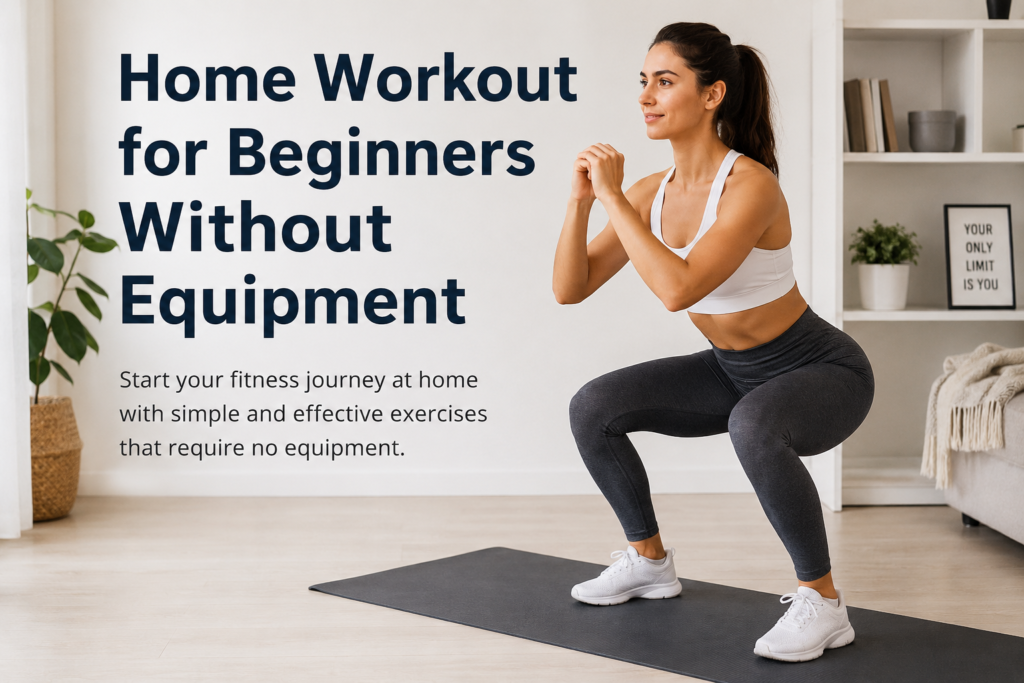
1. Bodyweight Squats
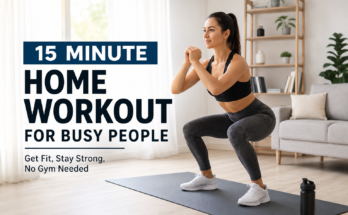
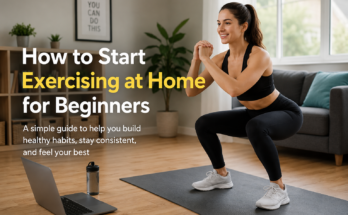
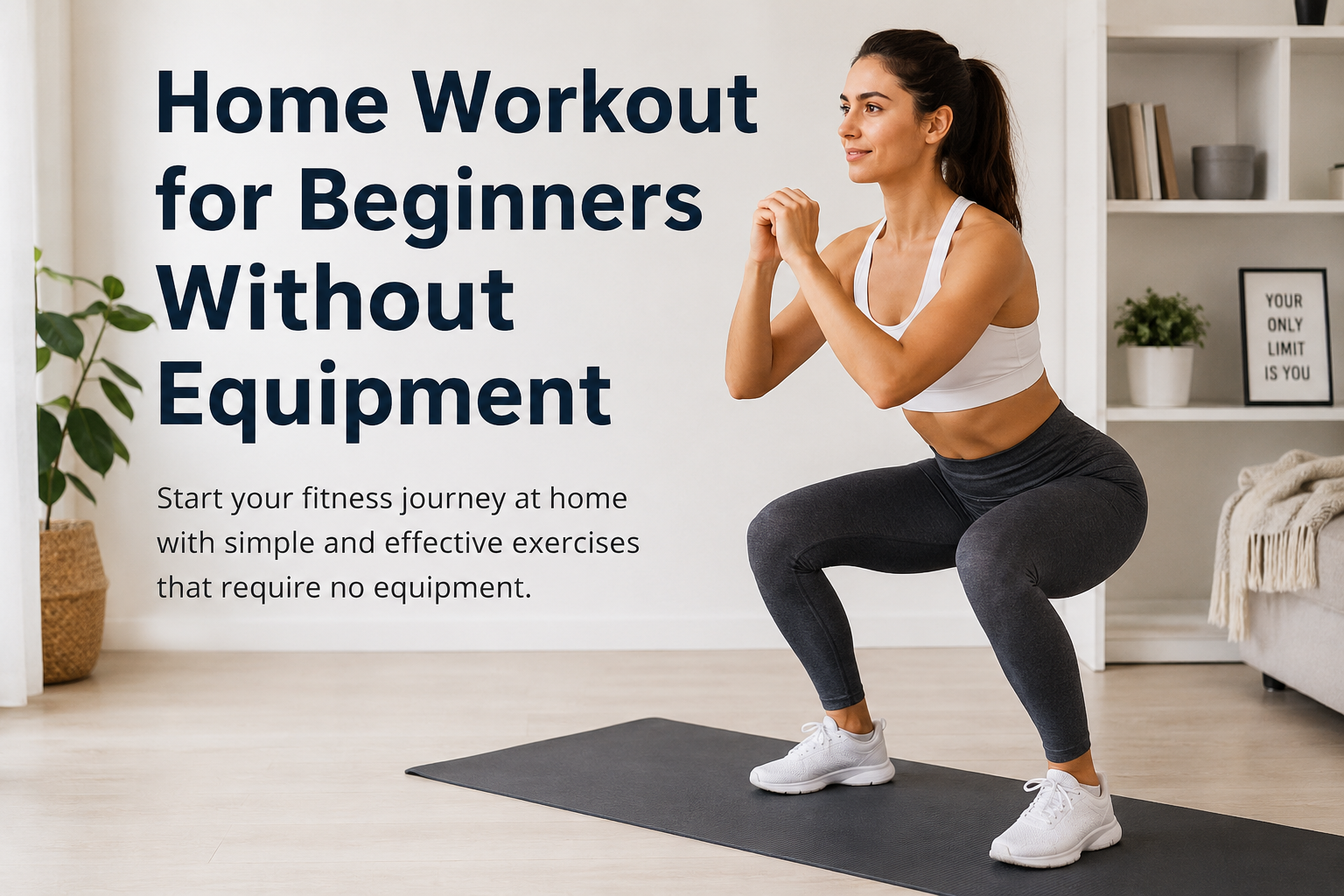
Bodyweight squats are one of my favorite beginner exercises because they work the legs and lower body while also teaching you how to control your movement.
Stand with your feet around shoulder width apart. Keep your chest comfortable and your back in a natural position. Slowly bend your knees and lower your hips as if you were sitting on a chair. Then push through your feet and return to the starting position.
Beginners can start with 8 to 12 repetitions. Focus on controlled movement instead of trying to perform as many squats as possible.
2. Wall Push Ups
Traditional push ups can feel difficult when you are new to exercise. Wall push ups are a simple alternative that allows beginners to practice the basic pushing movement.
Stand facing a wall and place your hands against it around shoulder height. Keep your body straight and slowly bend your elbows to bring your upper body closer to the wall. Push gently back to the starting position.
Try 8 to 12 repetitions. As your strength improves, you can progress to incline push ups using a stable surface and eventually regular push ups.
3. Reverse Lunges
Reverse lunges are another useful bodyweight exercise for beginners. They target the legs and can help improve balance and lower body strength.
Stand upright with your feet comfortable apart. Step one foot backward and slowly lower your body while bending both knees. Return to the starting position and repeat with the other leg.
Start with 6 to 10 repetitions on each side. Keep your movements controlled and use a wall or sturdy support if you need help with balance.
4. Glute Bridges
Glute bridges are performed on the floor and are useful for working the muscles around your hips and lower body.
Lie on your back with your knees bent and your feet resting on the floor. Keep your arms beside your body. Slowly lift your hips toward the ceiling while keeping your feet planted. Pause briefly at the top and then lower your hips.
Try 10 to 15 repetitions. Move slowly and focus on maintaining control throughout the exercise.
5. Bird Dog
The bird dog is a simple movement that challenges your balance and core control.
Start on your hands and knees. Slowly extend one arm forward while extending the opposite leg backward. Hold the position briefly, return to the starting position, and then switch sides.
Beginners can start with 6 to 8 repetitions on each side. Do not rush this exercise. Good control is more important than speed.
6. Standing Knee Raises
Standing knee raises are an easy way to add movement to a beginner home workout. They can also help improve coordination and gently increase your heart rate.
Stand upright and lift one knee toward your waist while keeping your upper body controlled. Lower the leg and repeat on the other side.
Continue for 30 to 45 seconds. If you are comfortable, you can gradually increase the pace.
7. Plank
The plank is a popular bodyweight exercise that focuses on core stability. Beginners do not need to hold a plank for a long time.
Start with your forearms and knees on the floor if a full plank feels too challenging. Keep your body controlled and avoid holding your breath.
Try holding the position for 10 to 20 seconds. With practice, you can gradually increase the duration.
8. Jumping Jacks
If your joints and fitness level allow it, jumping jacks can add a simple cardio element to your workout.
Stand with your feet together and arms by your sides. Jump gently while moving your feet apart and raising your arms. Return to the starting position and repeat.
Start with 20 to 30 seconds. If jumping is uncomfortable, you can perform a low impact version by stepping one foot out at a time instead.
A Simple Beginner Home Workout Routine
If you are wondering how to organize these exercises, you can start with a simple circuit.
Begin with 3 to 5 minutes of gentle warm up movements. You can walk around your room, move your arms, or perform slow knee raises.
Then complete:
10 bodyweight squats
8 wall push ups
8 reverse lunges on each side
12 glute bridges
6 bird dogs on each side
20 seconds of plank
30 seconds of standing knee raises
20 seconds of jumping jacks or low impact steps
Rest for about 30 to 60 seconds between exercises when needed. Beginners can complete one round at first. If you feel comfortable after several sessions, you can work toward two or three rounds.
How Often Should Beginners Exercise at Home?
Consistency is more important than doing an extremely hard workout once in a while. For many beginners, starting with three days of exercise each week can be a practical approach.
You can leave rest days between workouts to give your body time to recover. On those days, gentle walking or normal daily movement can still be useful.
As your fitness improves, you can gradually increase your activity. There is no need to rush. Your body needs time to adapt to new physical demands.
Common Mistakes Beginners Should Avoid
One common mistake is trying to exercise too intensely at the beginning. Feeling motivated is great, but doing too much too quickly can make it harder to continue.
Another mistake is ignoring exercise technique. Performing fewer repetitions with better control is usually more useful than rushing through a large number of repetitions.
I also recommend avoiding comparisons with people who have been exercising for years. Everyone starts from a different point. Your goal should be to improve your own strength and fitness gradually.
Skipping warm ups and ignoring recovery can also make workouts less comfortable. Give your body enough time to recover between challenging sessions.
How to Stay Consistent With Home Workouts
The hardest part of a home workout routine is often not the exercises themselves. It is staying consistent.
I find that choosing a specific workout time can make exercise easier to maintain. For example, you might exercise in the morning before work or in the evening after finishing your daily responsibilities.
Keep your first workouts simple. If you tell yourself that you need to exercise for an hour every day, the routine may quickly become difficult to maintain. A realistic 15 minute workout is often better than a one hour workout that you rarely complete.
Tracking your workouts can also help. Simply writing down the date and exercises you completed can show your progress over time.
Final Thoughts
A home workout for beginners without equipment can be an excellent starting point for building a healthier and more active lifestyle. You can use simple bodyweight exercises to train your legs, upper body, core, balance, and cardiovascular fitness without purchasing expensive equipment.
From my point of view, the most important thing is not creating the hardest workout possible. It is creating a routine that you can realistically follow. Start with simple movements, focus on good technique, give yourself enough recovery time, and gradually increase the challenge as you become stronger.
Remember that fitness is a long term process. You do not need to become perfect on your first day. Even a short and simple workout can be a positive step when you make it part of your regular routine.
If you have an injury, medical condition, or unusual pain during exercise, consider speaking with a qualified healthcare professional before starting or changing your exercise routine. Stop an exercise if it causes sharp or concerning pain.