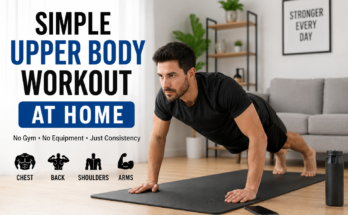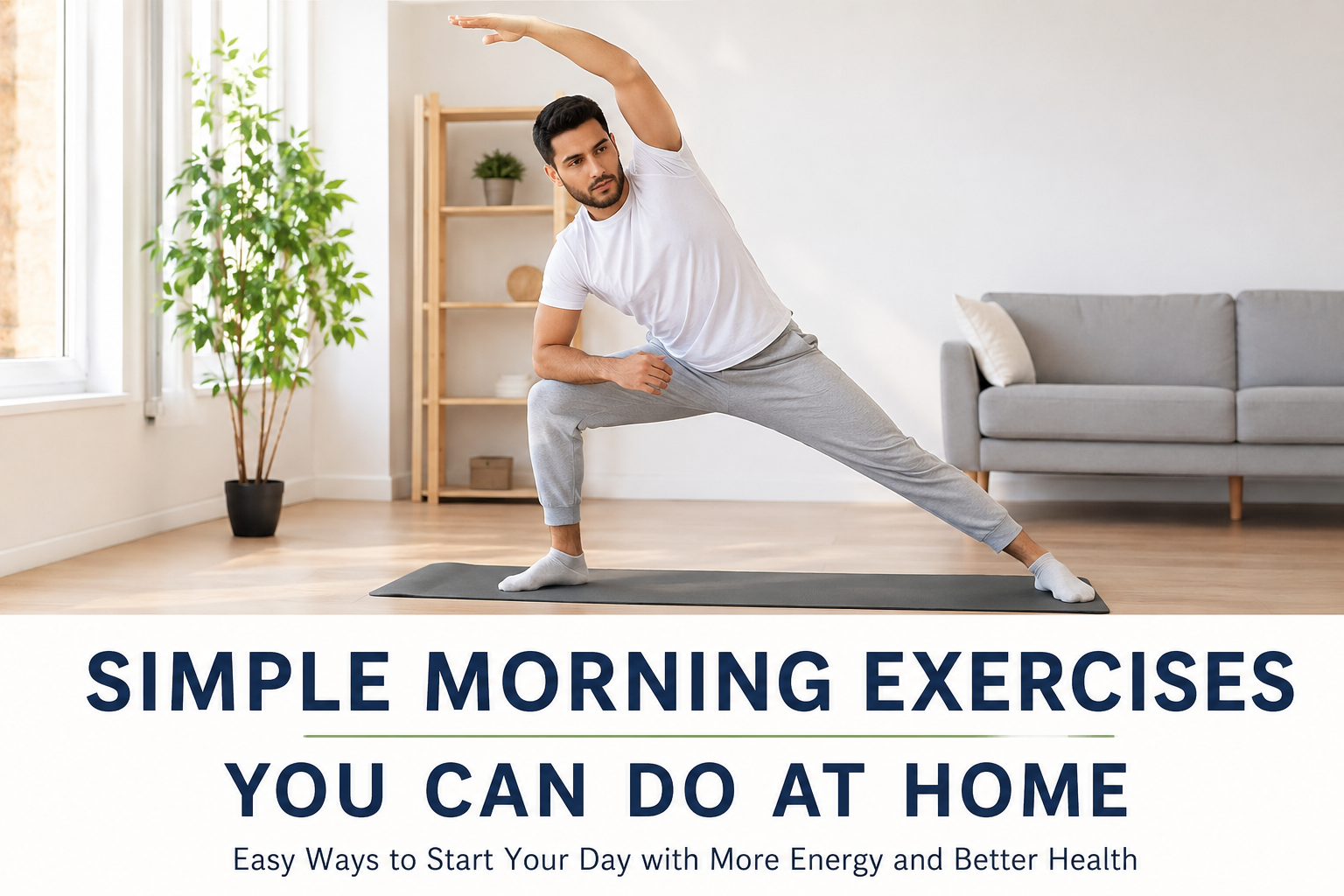
Starting the day with movement is one of the simplest habits I have found for feeling more active and focused. We often think that exercise requires a gym, expensive equipment, or a lot of free time, but that is not always true. Simple morning exercises at home can be enough to wake up the body, improve mobility, and prepare your mind for the day ahead.
In my experience, the biggest advantage of exercising in the morning is that it helps create a positive routine before daily responsibilities become distracting. You do not need to spend an hour exercising. Even 15 to 20 minutes of simple movement can be a useful way to begin your day.
Why Morning Exercise Is Important
Morning exercise can help you feel more awake after getting out of bed. After several hours of sleep, your muscles and joints may feel stiff, especially if you spend much of your day sitting. Gentle movement helps you gradually become more active.
Another benefit is that morning exercise can become a consistent habit. When I exercise early, I do not have to worry about finding time later when work, family responsibilities, or other activities take over my schedule.
The goal is not to make every morning extremely difficult. Instead, focus on regular movement that feels comfortable and sustainable.
1. Gentle Full Body Stretch
I like to begin with stretching because it gives the body time to wake up.
Stand comfortably with your feet about hip width apart. Raise both arms above your head and gently reach upward. Hold the position for several seconds while breathing normally. Then slowly bring your arms down.
You can also stretch from side to side. Raise one arm and gently lean toward the opposite side. Repeat on the other side.
Spend about two to three minutes stretching. Avoid bouncing or forcing your body into uncomfortable positions.
2. Marching in Place
Marching in place is one of the easiest morning exercises at home for beginners.
Stand upright and slowly lift one knee, then the other. Move your arms naturally as you march. Once you feel comfortable, increase the pace slightly.
Try marching for one to two minutes. This simple movement can gradually increase your heart rate and make you feel more awake.
If you are new to exercise, start slowly. You can increase the duration as your fitness improves.
3. Bodyweight Squats
Squats are a useful exercise for working the muscles of your legs and hips. They can be done without any equipment, making them ideal for a simple home workout.
Stand with your feet about shoulder width apart. Keep your chest comfortable and slowly bend your knees while moving your hips backward. Lower yourself only as far as feels comfortable, then return to the standing position.
Start with 8 to 10 repetitions. If that feels easy after several sessions, you can gradually increase the number.
The most important thing is to focus on controlled movement rather than doing many repetitions quickly.
4. Wall Push Ups
Traditional push ups can be difficult for beginners, so wall push ups are a good starting point.
Stand facing a wall and place your hands against it at about chest height. Slowly bend your elbows and bring your body closer to the wall. Then gently push yourself back.
Try 8 to 12 repetitions.
As you become stronger, you can eventually move to an easier floor based push up variation if it feels appropriate for you.
5. Glute Bridges
Glute bridges are another simple exercise that can be included in a beginner morning workout.
Lie on your back with your knees bent and your feet comfortably placed on the floor. Keep your arms beside your body. Slowly lift your hips while keeping your movements controlled. Pause briefly at the top, then lower your hips.
Try 10 repetitions to begin with.
This exercise can be especially useful for people who spend many hours sitting during the day because it encourages movement through the hips.
6. Bird Dog
The bird dog is a gentle movement that challenges balance and coordination.
Start on your hands and knees. Slowly extend one arm and the opposite leg. Hold the position for a moment, then return to the starting position. Repeat with the other arm and leg.
Start with 5 repetitions on each side.
Move slowly and concentrate on keeping your body stable. There is no need to rush this exercise.
7. Standing Knee Raises
Standing knee raises are easy to perform in a small space.
Stand upright and slowly lift one knee toward your waist. Lower it and repeat with the other leg. Keep your upper body comfortable and use your arms for balance if necessary.
Continue for 30 to 60 seconds.
This movement can be included in a short home morning exercise routine because it requires no equipment and very little space.
8. Calf Raises
Calf raises are simple but useful for adding movement to your morning routine.
Stand behind a sturdy chair or near a wall if you need support. Slowly raise your heels so you are standing on the balls of your feet. Pause briefly, then lower your heels.
Try 10 to 15 repetitions.
Keep your movements controlled and use support whenever you need it.
9. Gentle Arm Circles
Arm circles are a simple way to move your shoulders after sleeping.
Stand comfortably and extend your arms to the sides. Make small circles with your arms. Gradually make the circles slightly larger if the movement feels comfortable.
Do the movement in both directions for about 20 to 30 seconds.
This is a particularly easy exercise to add between other movements in your morning routine.
10. Easy Cool Down
After completing your exercises, spend a few minutes slowing down.
Walk around the room at an easy pace and take comfortable breaths. You can finish with gentle stretches for your arms, shoulders, legs, and back.
I believe the cool down is worth including because it gives your body a gradual transition from exercise back to your normal morning activities.
A Simple 15 Minute Morning Workout
If you are not sure how to organize these exercises, you can keep your routine very simple.
Start with two minutes of gentle stretching. Follow this with two minutes of marching in place. Then perform 10 bodyweight squats, 10 wall push ups, 10 glute bridges, and 5 bird dogs on each side.
After that, do one minute of standing knee raises and 10 calf raises. Finish with three to four minutes of gentle walking and stretching.
You can adjust the routine according to your fitness level. The purpose is to create a routine that you can repeat regularly rather than making every workout exhausting.
Tips for Making Morning Exercise a Habit
The hardest part of morning exercise is often getting started. One thing that has helped me is preparing everything the night before. Keep comfortable workout clothes nearby so you do not have to make many decisions in the morning.
Another useful approach is to start small. If 30 minutes sounds difficult, begin with 10 minutes. Once exercising becomes part of your routine, you can gradually increase the duration.
Try to choose exercises that you actually enjoy. A routine does not have to be complicated to be effective for your personal goals.
It is also important to listen to your body. Mild effort is normal, but sharp pain, dizziness, or unusual discomfort is a reason to stop and seek appropriate professional advice if needed.
How Often Should You Do Morning Exercises?
For beginners, consistency is more important than intensity. You can start with short sessions several mornings each week and gradually build your routine.
Some days you may have more energy, while other days you may feel tired. It is completely reasonable to adjust the intensity. A gentle stretching session can still be useful on a day when a more demanding workout does not feel appropriate.
The long term goal should be regular physical activity that fits naturally into your lifestyle.
Common Mistakes Beginners Should Avoid
One common mistake is trying to do too much too quickly. If you have not exercised regularly, starting with an intense workout can make you extremely tired or uncomfortable.
Another mistake is ignoring proper form. Performing fewer repetitions with controlled movement is usually better than rushing through a large number of repetitions.
You should also avoid comparing your routine with someone else’s. Everyone starts from a different fitness level. Your goal should be to improve gradually.
Finally, do not believe that a workout must leave you exhausted to be worthwhile. Simple movement can be a valuable part of an active lifestyle.
Final Thoughts
Simple morning exercises you can do at home do not need to be complicated. Stretching, marching, squats, wall push ups, glute bridges, bird dogs, and other bodyweight movements can help you start your day with purposeful activity.
What matters most to me is consistency. A short workout that you can comfortably repeat is more realistic than an intense routine that you quickly abandon.
Start with 10 to 15 minutes, learn the movements, and gradually increase your activity as you become more comfortable. You do not need a gym or expensive equipment to make movement part of your morning. Your home and your own body can provide everything you need to take the first step toward a more active daily routine.