Building a consistent exercise routine can feel difficult when life is already busy. Work, family responsibilities, household tasks, and personal commitments can easily push exercise to the bottom of the list. In my experience, the biggest challenge is usually not knowing what exercises to do. The real challenge is creating a routine that fits naturally into everyday life.
A good exercise routine does not have to be complicated or extremely intense. What matters most is consistency. Even a simple workout plan can produce meaningful results when you follow it regularly. The goal should be to make physical activity a normal part of your day rather than something you only do when you feel motivated.
In this article, I will share simple and practical ways to build a consistent exercise routine that is realistic, flexible, and easier to maintain.
Start With Small Exercise Goals
One of the biggest mistakes people make when starting exercise is trying to do too much too soon. You may feel motivated at the beginning and decide to exercise for an hour every day. After a few days, however, the routine can become tiring and difficult to maintain.
I believe starting small is a much better approach. Begin with a workout that feels manageable. You could start with 15 to 20 minutes of walking, stretching, bodyweight exercises, or another activity you enjoy.
Small goals are easier to complete, and completing them regularly can help build confidence. Once exercise becomes a habit, you can gradually increase the duration or intensity.
Choose Exercises You Actually Enjoy
Exercise should not feel like a punishment. If you hate a particular workout, it can become much harder to stay consistent.
There are many ways to stay active. You can walk, cycle, swim, dance, stretch, lift weights, play a sport, or follow a home workout. The best exercise for you is often the activity you genuinely enjoy doing.
Personally, I think enjoyment is an important part of long term fitness. When you like the activity, you are more likely to look forward to it instead of constantly finding reasons to avoid it.
Try different activities until you discover what works for you. You do not need to copy someone else’s workout routine.
Create a Realistic Weekly Workout Schedule
A consistent exercise routine becomes easier when you know exactly when you are going to exercise.
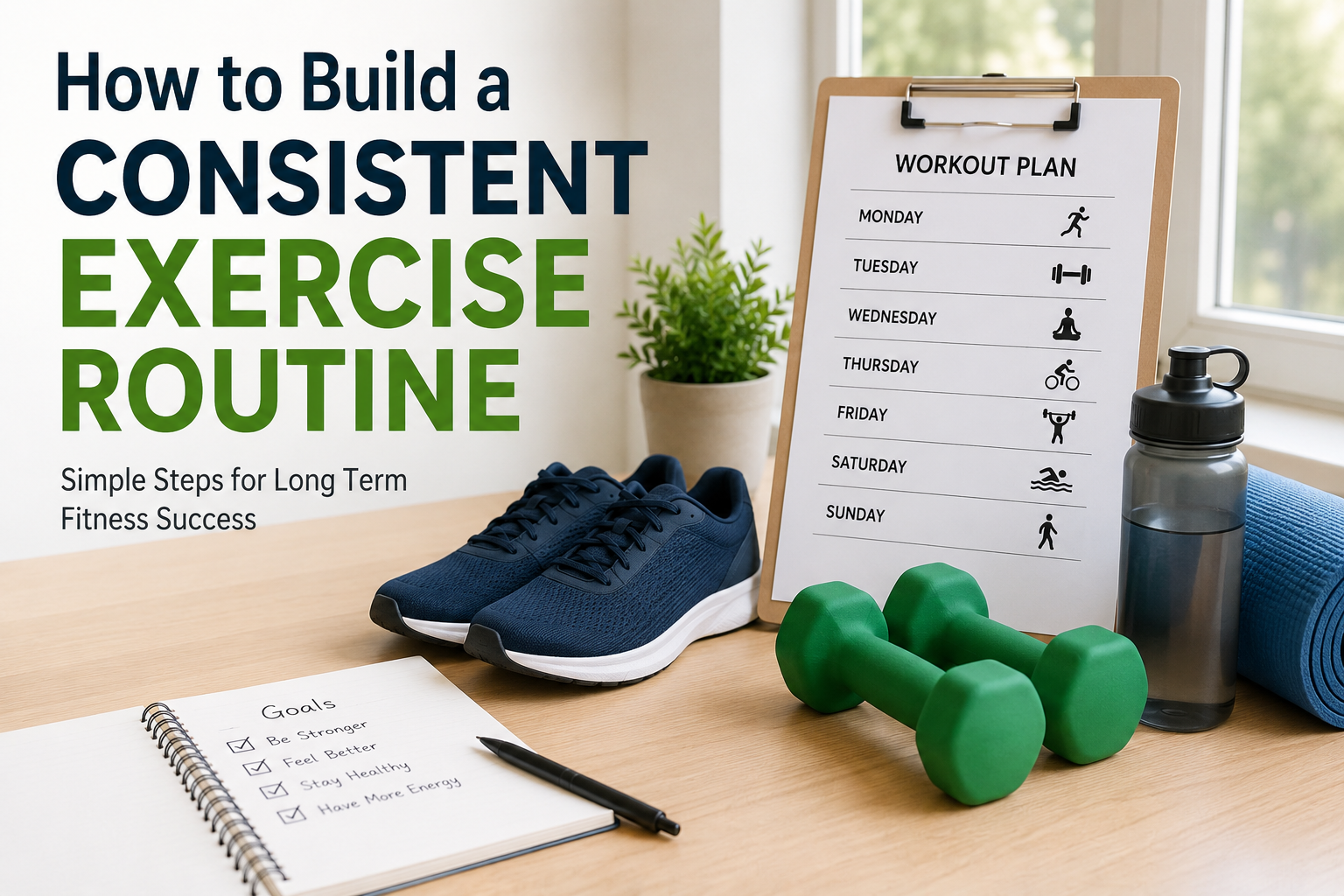
Instead of simply saying, “I will work out this week,” choose specific days and times. For example, you could plan strength training on Monday and Friday, walking on Tuesday and Thursday, and stretching on Wednesday.
Your schedule does not need to be perfect. The important thing is that it fits your lifestyle.
If mornings are busy, try exercising later in the day. If evenings are usually unpredictable, consider a short morning workout. Finding a realistic time can make a major difference in your ability to stay consistent.
Make Exercise Part of Your Daily Routine
One useful way to build an exercise habit is to connect it with something you already do every day.
For example, you could walk after breakfast, stretch after work, or exercise after changing clothes in the evening. When a workout becomes connected to an existing habit, remembering to exercise can become easier.
I find that routines work better when they require less decision making. If you already know when and where you will exercise, you have fewer excuses to postpone it.
Over time, your workout can become as normal as brushing your teeth or preparing your morning coffee.
Keep Your Workout Simple
You do not need expensive equipment or a complicated gym program to build a consistent exercise routine.
A simple home workout can include squats, wall push ups, lunges, glute bridges, planks, and stretching. Walking is another excellent way to increase daily physical activity without needing special equipment.
If you have access to a gym, you can use machines and weights, but they are not essential for getting started.
Keeping your exercise plan simple can reduce stress and make it easier to continue when you are busy.
Prepare for Your Workout in Advance
Preparation can make exercise much easier. Before your planned workout, place your shoes, clothes, water bottle, or other equipment where you can easily see them.
If you exercise at home, prepare your workout space beforehand. If you go to a gym, pack your bag earlier in the day.
These small steps may seem unimportant, but they reduce the number of things you need to do before starting.
For me, having everything ready creates a mental signal that it is time to exercise. It also makes it less tempting to postpone the workout.
Focus on Consistency Instead of Perfection
Life does not always follow a perfect schedule. There will be days when you are tired, busy, traveling, or simply not in the mood to exercise.
Missing one workout does not mean your entire exercise routine has failed.
I think one of the most important fitness habits is learning how to restart without feeling guilty. If you miss Monday, continue on Tuesday. If you have a busy week, reduce your workout time instead of abandoning exercise completely.
Consistency does not mean doing everything perfectly. It means continuing to return to your routine.
Use Short Workouts on Busy Days
A common reason people skip exercise is lack of time. However, you do not always need a long workout to stay active.
On a busy day, a 10 or 15 minute workout can be a practical alternative. You could take a quick walk, perform several bodyweight exercises, or spend a few minutes stretching.
Short workouts can help maintain the habit even when your schedule is full.
The goal is not to make every workout impressive. The goal is to keep physical activity connected to your daily life.
Track Your Exercise Progress
Tracking your workouts can help you understand your habits and stay motivated.
You can use a notebook, calendar, phone app, or simple checklist. Record the days you exercise, the type of workout, and how long you exercised.
You can also track other improvements, such as walking farther, completing more repetitions, using better technique, or feeling more energetic.
Progress is not always about physical appearance. Sometimes the most meaningful changes are improved stamina, better movement, increased confidence, and feeling stronger during everyday activities.
Give Your Body Time to Recover
Exercise is important, but recovery is also part of a healthy exercise routine.
Your body needs time to rest and adapt after physical activity. Make sure your routine includes easier days and rest days when appropriate.
Getting enough sleep, drinking water, eating balanced meals, and allowing tired muscles to recover can help you maintain your routine.
Pushing yourself every day without enough recovery can make exercise feel exhausting. A balanced approach is usually easier to maintain for the long term.
Find Ways to Stay Motivated
Motivation can be helpful, but it should not be the only thing controlling your exercise routine. Motivation naturally changes from day to day.
Instead, try creating simple reasons to stay active. You might exercise because you want more energy, better strength, improved fitness, or more confidence in everyday activities.
You can also make workouts more enjoyable by listening to music, exercising with a friend, exploring a new walking route, or trying a different activity.
Small rewards can also help. After completing a workout, take a few minutes to relax, listen to your favorite music, or enjoy another healthy activity you like.
Make Your Routine Flexible
A good exercise routine should be flexible enough to survive changes in your schedule.
If you planned a 45 minute workout but only have 20 minutes available, adjust the workout instead of skipping it completely. If you cannot go outside because of the weather, exercise indoors.
Flexibility is especially important because unexpected situations are part of normal life.
Your exercise routine should support your lifestyle rather than make your lifestyle stressful.
Build the Habit Gradually
Building a consistent exercise routine takes time. You may not feel comfortable with your schedule during the first few weeks, and that is completely normal.
Focus on repeating the behavior. The more often you exercise at a similar time and in a familiar way, the easier it can become.
Instead of asking yourself whether you feel motivated today, ask whether you can complete the next small step.
Put on your shoes. Start your warm up. Take a short walk. Complete a few exercises. Often, starting is the hardest part.
Final Thoughts
Learning how to build a consistent exercise routine is less about creating the perfect workout and more about creating a routine you can actually maintain.
Start with small goals, choose activities you enjoy, create a realistic schedule, prepare in advance, and stay flexible when life becomes busy. Remember that missing one workout does not erase your progress.
In my opinion, the best exercise routine is one that fits your real life. You do not need to exercise perfectly every day. You simply need to keep moving forward and return to your routine whenever you get off track.
With patience and consistency, exercise can become a natural part of your everyday lifestyle rather than another task on your to do list.
SEO Keywords: consistent exercise routine, how to build an exercise routine, exercise routine for beginners, consistent workout routine, daily exercise routine, fitness routine, workout schedule, healthy exercise habits, regular exercise, exercise motivation