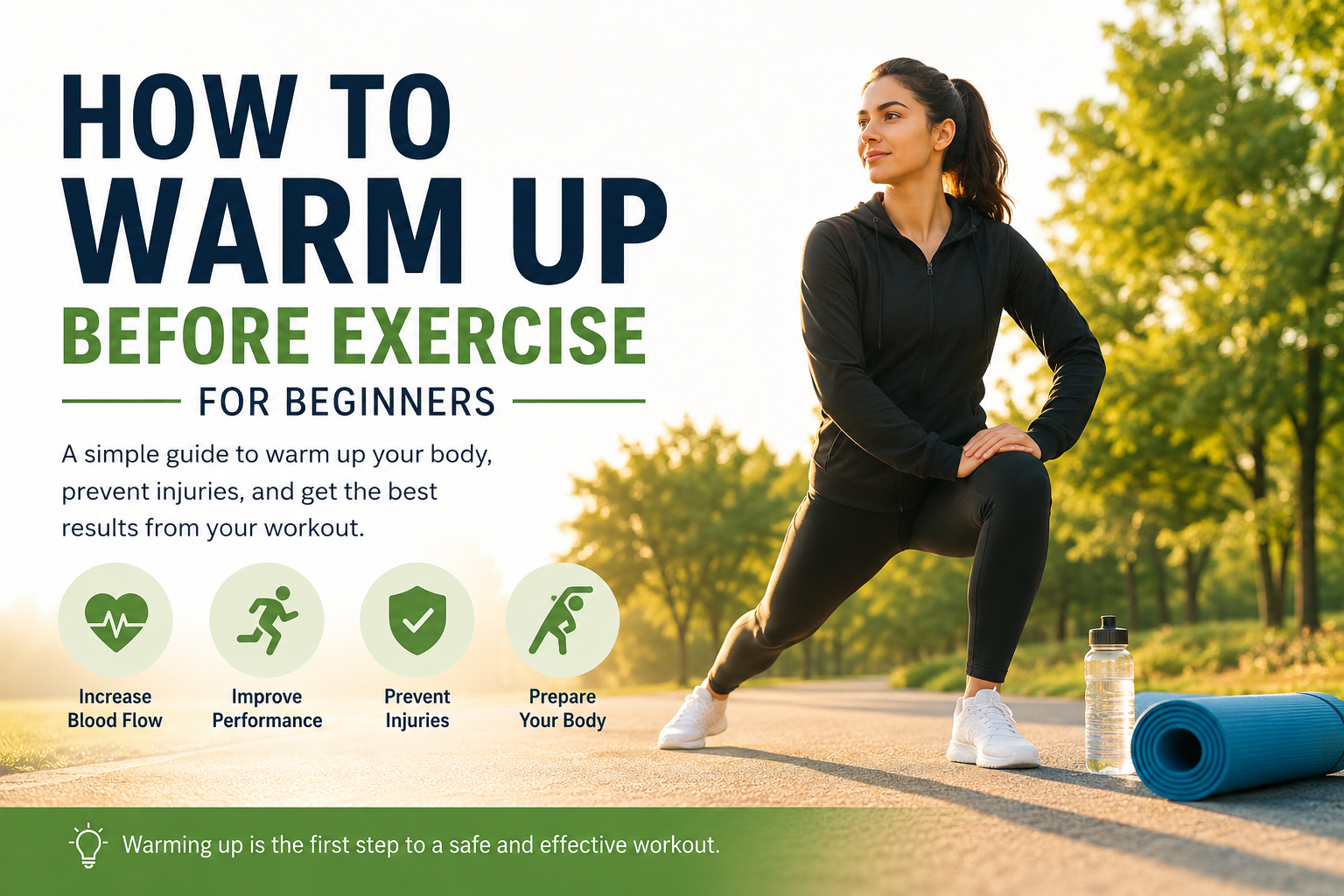
Starting a workout can feel exciting, especially when you are motivated to become healthier and more active. However, one part of exercise that beginners often overlook is the warm up. In my opinion, a good warm up is one of the simplest habits you can develop when starting a fitness routine. It helps prepare your body for movement, gets your muscles ready, and can make your workout feel more comfortable.
You do not need an expensive gym, special equipment, or a complicated routine to warm up properly. A few minutes of simple movements can be enough to prepare your body for exercise. Whether you are planning to walk, run, strength train, cycle, or follow a home workout, learning how to warm up before exercise can make a big difference.
Why Is a Warm Up Important?
A warm up gradually prepares your body for physical activity. When you move gently before exercising, your heart rate begins to increase and your muscles become more prepared for the movements ahead.
I think one of the biggest mistakes beginners make is going directly from sitting or resting into intense exercise. Your body needs some time to adjust. A warm up gives you that transition.
A proper warm up can also help you feel more comfortable during the first few minutes of your workout. Instead of feeling stiff and suddenly challenged, you can gradually increase your activity level.
How Long Should a Beginner Warm Up?
For most beginners, a warm up of around 5 to 10 minutes is a practical starting point. The exact amount of time depends on the type and intensity of exercise you are planning to do.
If you are going for a relaxed walk, a few minutes of easy walking may be enough. If you are preparing for strength training, running, or a more demanding workout, you may want to spend closer to 10 minutes warming up.
The important thing is not to turn your warm up into another exhausting workout. You should feel warmer and more prepared, not tired before your main exercise begins.
Start With Easy Movement
The easiest way to warm up before exercise is to begin with simple, low intensity movement.
For example, you can walk slowly around your home, walk on a treadmill, or march gently in place. After a minute or two, gradually increase your pace.
This is something I personally recommend to beginners because it is simple and does not require much fitness experience. You can focus on moving comfortably instead of worrying about complicated exercises.
Other easy options include gentle cycling, slow step movements, or walking around your neighborhood.
Try Marching in Place
Marching in place is another useful beginner warm up exercise. Stand comfortably and lift one foot at a time while moving your arms naturally.
Start slowly and then increase the pace slightly. You do not need to lift your knees very high.
Try marching for about one or two minutes. This movement can help you become more active while gently preparing your legs and hips for exercise.
If you are exercising at home, marching in place is especially convenient because you do not need any equipment or much space.
Move Your Arms and Shoulders
Your upper body also needs attention during a warm up. Gentle arm circles and shoulder movements can help you prepare for exercises that involve your arms, shoulders, and upper back.
Start with small arm circles and gradually make them slightly larger. You can also gently roll your shoulders forward and backward.
Keep the movement controlled and comfortable. A warm up should never feel painful.
If you are planning to do exercises such as push ups, resistance training, or upper body workouts, spending a little time moving your shoulders and arms can be a useful part of your preparation.
Use Dynamic Stretching
Dynamic stretching involves moving your body through a comfortable range of motion rather than holding a stretch for a long time.
For beginners, simple dynamic movements can be included after a few minutes of light activity. Examples include gentle leg swings, walking lunges, arm circles, and controlled knee lifts.
The goal is not to force flexibility. Instead, focus on smooth and controlled movements.
For example, if you plan to run, you might use gentle leg movements and walking lunges to prepare your lower body. If you plan to do an upper body workout, controlled arm and shoulder movements may be more useful.
Avoid Intense Static Stretching Before Every Workout
Stretching is often associated with warming up, but there is an important difference between dynamic movements and long static stretches.
Static stretching means holding a position for a period of time. These stretches can be useful in a fitness routine, but I would not make long static stretching the main part of your warm up immediately before an intense workout.
Instead, begin with light movement and use dynamic exercises to prepare your body. You can include more relaxed stretching later, such as after your workout or during a separate flexibility session.
Match Your Warm Up to Your Workout
One of the best beginner fitness tips is to make your warm up match the activity you are about to perform.
If you are going for a walk, start with slow walking and gradually increase your pace.
If you are preparing for a run, begin with walking and then add some gentle jogging before reaching your normal running speed.
If you are doing strength training, start with easy movements that involve the muscles you plan to train. You can also perform a few repetitions of an exercise using very little or no weight before beginning your working sets.
If you are doing a home workout, spend several minutes moving your whole body before starting the more challenging exercises.
This approach makes your warm up practical instead of following the same routine every time.
A Simple 10 Minute Warm Up for Beginners
If you are unsure where to start, here is a simple warm up routine you can try.
Begin with two minutes of easy walking or marching in place.
Next, spend one minute doing gentle shoulder rolls and arm circles.
After that, perform one minute of controlled knee lifts.
Then spend two minutes doing easy bodyweight movements such as shallow squats or gentle step backs.
Follow this with two minutes of dynamic leg movements and light walking.
Finish with two minutes of gradually faster movement that resembles your planned workout.
You can adjust the routine according to your fitness level. If something feels uncomfortable, reduce the range of motion or choose a simpler movement.
Pay Attention to How Your Body Feels
A warm up is also a good opportunity to check how your body feels before exercising.
Notice whether you feel stiff, tired, unusually weak, or uncomfortable. Normal movement should gradually make you feel more prepared. However, sharp pain or unusual symptoms should not be ignored.
Beginners sometimes believe they have to push through everything to make progress. I think this is the wrong approach. Good fitness is not about ignoring warning signs. It is about learning to understand your body and progressing gradually.
If you have an injury, medical condition, or concerns about starting exercise, consider speaking with an appropriate healthcare professional before beginning a new workout program.
Common Warm Up Mistakes Beginners Make
There are several common mistakes that can make a warm up less useful.
One mistake is skipping it completely because you are in a hurry. Even a few minutes of light movement can be better than going straight into intense exercise.
Another mistake is warming up too hard. Your warm up should prepare you for exercise, not leave you exhausted.
Some beginners also perform movements too quickly. Controlled movement is usually more useful than rushing through exercises.
Another common mistake is using the exact same warm up for every workout. Your preparation should reflect the activity you are about to do.
Finally, never assume that pain is a normal part of warming up. If a movement causes sharp or concerning pain, stop and reassess.
Warm Up Even When You Exercise at Home
You do not need to be at a gym to benefit from a proper warm up. In fact, home workouts can make warming up very easy.
You can march in place, walk around your room, perform gentle squats, move your arms, and gradually increase your activity level.
This is particularly useful for beginners because you can warm up without feeling self conscious. You can take your time and focus on learning how your body moves.
Make Warming Up a Habit
The biggest benefit of learning how to warm up before exercise is developing a consistent habit.
Instead of thinking about a warm up as something optional, make it the first part of your workout routine. Once it becomes automatic, you will not have to spend much time deciding what to do.
A simple routine that you actually follow is better than a complicated routine that you constantly skip.
Over time, you can learn which movements make you feel prepared for different types of exercise. Your warm up can then become more personalized as your fitness experience grows.
Final Thoughts
Learning how to warm up before exercise for beginners does not have to be complicated. Start with five to ten minutes of easy movement, gradually increase your activity level, and include simple dynamic movements that match your workout.
In my view, the best warm up is one that makes you feel ready without making you tired. Walking, marching, gentle arm movements, controlled leg exercises, and workout specific movements can all be useful options.
The most important thing is consistency. Make warming up part of every workout, listen to your body, and increase exercise intensity gradually. With time, this small habit can become a natural part of your fitness routine and help you approach exercise with greater confidence.
Remember that fitness is a journey rather than a race. You do not need to do everything perfectly from the beginning. Start slowly, learn the basics, stay consistent, and give your body time to adapt.