Starting a fitness journey can feel confusing when you have never followed a workout routine before. There are so many exercises, workout plans, fitness videos, and opinions online that it can be difficult to know where to begin. In my experience, the best approach for a beginner is to keep things simple, realistic, and enjoyable.
You do not need an expensive gym membership, advanced equipment, or hours of free time to become more active. A beginner fitness routine can start with basic movements, regular walking, simple strength exercises, and enough rest. The most important thing is creating habits that you can continue.
If you are looking for a beginner fitness routine for people with no experience, this guide will help you understand how to start safely and build your confidence step by step.
Why Start With a Beginner Fitness Routine?
When you are new to exercise, your body needs time to adapt. Starting with an intense workout may leave you extremely tired or sore and can make exercise feel unpleasant. A simple fitness routine allows you to learn proper movement, improve your stamina, and gradually become stronger.
I believe consistency is much more important than trying to do everything during the first week. Even a short workout can be useful when you make it part of your regular schedule.
Regular physical activity can also support everyday energy, mobility, strength, and overall fitness. The goal at the beginning should not be perfection. The goal should be building a routine that feels manageable.
Start With Walking
Walking is one of the easiest activities for someone with no fitness experience. You do not need special skills, and you can usually do it outdoors or indoors.
If you currently spend most of your day sitting, start with a comfortable walk for around 10 to 20 minutes. Focus on moving at a pace that feels comfortable. As your fitness improves, you can gradually increase the duration.
Walking can also become a simple warm up before a workout. I personally think it is a great starting point because it removes much of the pressure that beginners often feel about exercise.
A Simple Weekly Beginner Fitness Routine
A beginner does not need to exercise every day. Three workout days per week can be a practical starting point, with light activity such as walking on other days.
Here is a simple example:
Monday: Full body beginner workout
Tuesday: Easy walk or rest
Wednesday: Full body beginner workout
Thursday: Easy walk or rest
Friday: Full body beginner workout
Saturday: Light recreational activity
Sunday: Rest
This schedule gives your body time to recover while still creating regular exercise habits.
Basic Exercises for Beginners
A good beginner fitness routine should focus on simple movements that work several major muscle groups. You can perform many of these exercises at home without equipment.
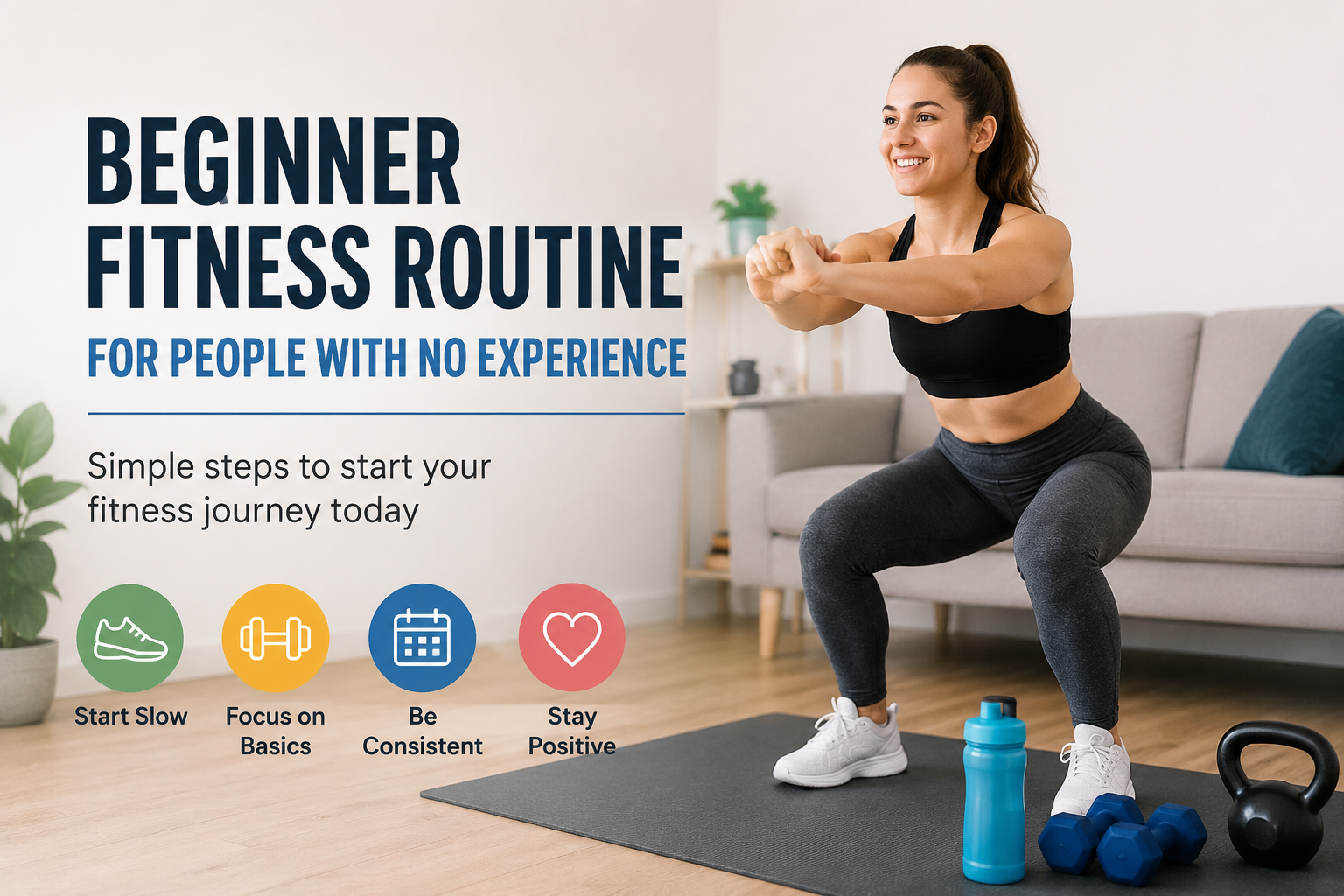
Bodyweight Squats
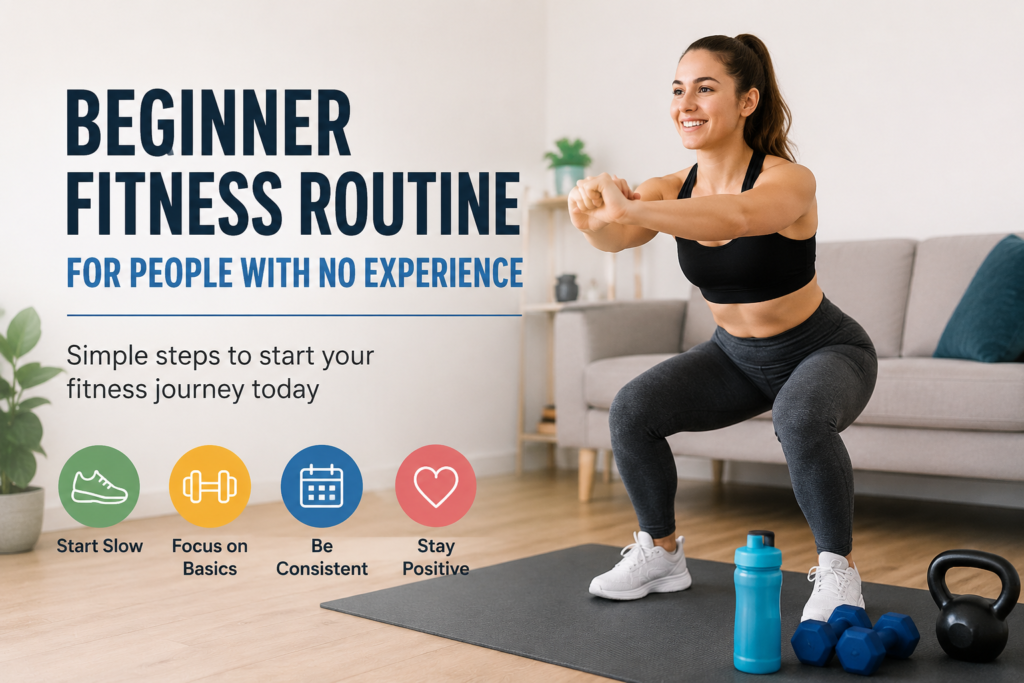
Squats are a useful beginner exercise for strengthening the lower body. Stand with your feet around shoulder width apart and slowly bend your knees while keeping your chest comfortable and upright. Move only as far as you can control, then return to the starting position.
If regular squats feel difficult, you can practice sitting down and standing up from a sturdy chair.
Wall Push Ups
Traditional push ups can be challenging for someone who has never exercised. Wall push ups are a gentler option.
Stand facing a wall, place your hands against it, and slowly bend your elbows to bring your body closer to the wall. Then push yourself back.
As you become stronger, you can gradually progress to a lower surface and eventually try regular push ups if they feel appropriate.
Glute Bridges
Glute bridges are performed while lying on your back with your knees bent. Keep your feet on the floor and gently lift your hips before lowering them with control.
This movement can help beginners practice controlled lower body movement without requiring complicated equipment.
Standing Knee Raises
Standing knee raises are simple and can help you become more comfortable with movement. Stand upright and slowly lift one knee, lower it, and then repeat on the other side.
You can use a wall or sturdy surface for balance if necessary.
Plank
A plank can be useful for practicing core stability. However, beginners do not need to hold a plank for a long time. Start with a short duration while focusing on maintaining a comfortable position.
If a standard plank is too difficult, you can try a modified version with your knees supported.
How Many Repetitions Should Beginners Do?
There is no single number that works perfectly for everyone. Your current fitness level, age, experience, and physical condition all matter.
As a general starting point, you might perform around 8 to 12 controlled repetitions of simple exercises. Complete one or two sets and focus on learning the movement rather than rushing.
For exercises based on time, such as walking or planks, start with a duration that you can manage comfortably.
The important point is to avoid treating your first workout like a test. You are building a foundation.
Always Warm Up
A warm up can help you prepare mentally and physically for exercise. You do not need a complicated warm up.
Start with a few minutes of easy walking or gentle movement. You can also move your arms, shoulders, hips, and ankles through comfortable ranges of motion.
The purpose is simply to prepare for the activity ahead. Avoid aggressive stretching or movements that cause pain.
Do Not Ignore Rest and Recovery
One mistake I often see beginners make is believing that more exercise always means better results. Recovery is also an important part of fitness.
Your body needs time to adapt after physical activity. If you feel unusually tired or uncomfortable, take a rest day or choose gentle movement instead of forcing yourself through a difficult workout.
Good sleep, regular meals, hydration, and rest can all support your fitness journey.
Increase Your Workout Slowly
Once your beginner fitness routine starts feeling easier, you can gradually increase the challenge.
For example, you could add a few minutes to your walk, perform a few more repetitions, add another set, or choose a slightly more challenging version of an exercise.
There is no need to make major changes every week. Small improvements can add up over time.
I prefer the idea of progressing slowly because it makes fitness feel more sustainable. You are not trying to become extremely fit overnight. You are creating a lifestyle that can continue for months and years.
Listen to Your Body
Learning the difference between normal exercise effort and pain is important. Exercise may make your muscles feel tired, but sharp or unusual pain should not be ignored.
If an exercise causes pain, stop and reassess your technique. You may need to use an easier variation or speak with a qualified healthcare professional or fitness professional.
People with existing medical conditions, injuries, or concerns about starting exercise should seek appropriate professional advice before beginning a new fitness program.
Make Your Fitness Routine Enjoyable
A workout does not have to feel like punishment. If you dislike a particular activity, there are many other ways to stay active.
You could walk while listening to music, dance at home, ride a bicycle, swim, play a recreational sport, or try beginner strength exercises.
Finding activities that you genuinely enjoy can make it easier to stay consistent.
I think this is one of the most overlooked parts of fitness. The best beginner workout is often the one you are willing to do regularly.
Avoid Comparing Yourself With Others
Social media can make fitness look much easier than it really is. You may see people lifting heavy weights, running long distances, or showing impressive transformations.
Remember that everyone starts from a different point.
Your first goal should be improving your own habits. Maybe today you can walk for 15 minutes. After several weeks, you may be able to walk for 30 minutes comfortably. That progress matters.
Fitness is personal, and your routine should match your current abilities and lifestyle.
Simple Tips to Stay Consistent
Creating a routine is easier when you remove unnecessary obstacles. Choose a regular workout time and keep your exercise clothes ready. Put your workouts on your calendar and start with realistic goals.
You can also keep a simple record of your workouts. Write down when you exercised, what you did, and how you felt afterward.
Do not worry if you miss a workout. One missed day does not destroy your progress. Simply return to your routine when you can.
Final Thoughts
Starting exercise with no experience does not have to be complicated. A beginner fitness routine can be built around walking, basic strength exercises, gentle movement, rest, and gradual progress.
The biggest lesson I have learned is that consistency matters more than intensity. You do not need to destroy yourself during every workout. You simply need to keep showing up and give your body time to improve.
Start small, learn the basic movements, pay attention to how your body feels, and increase your activity gradually. With patience and consistency, those simple workouts can become a strong foundation for a healthier and more active lifestyle.