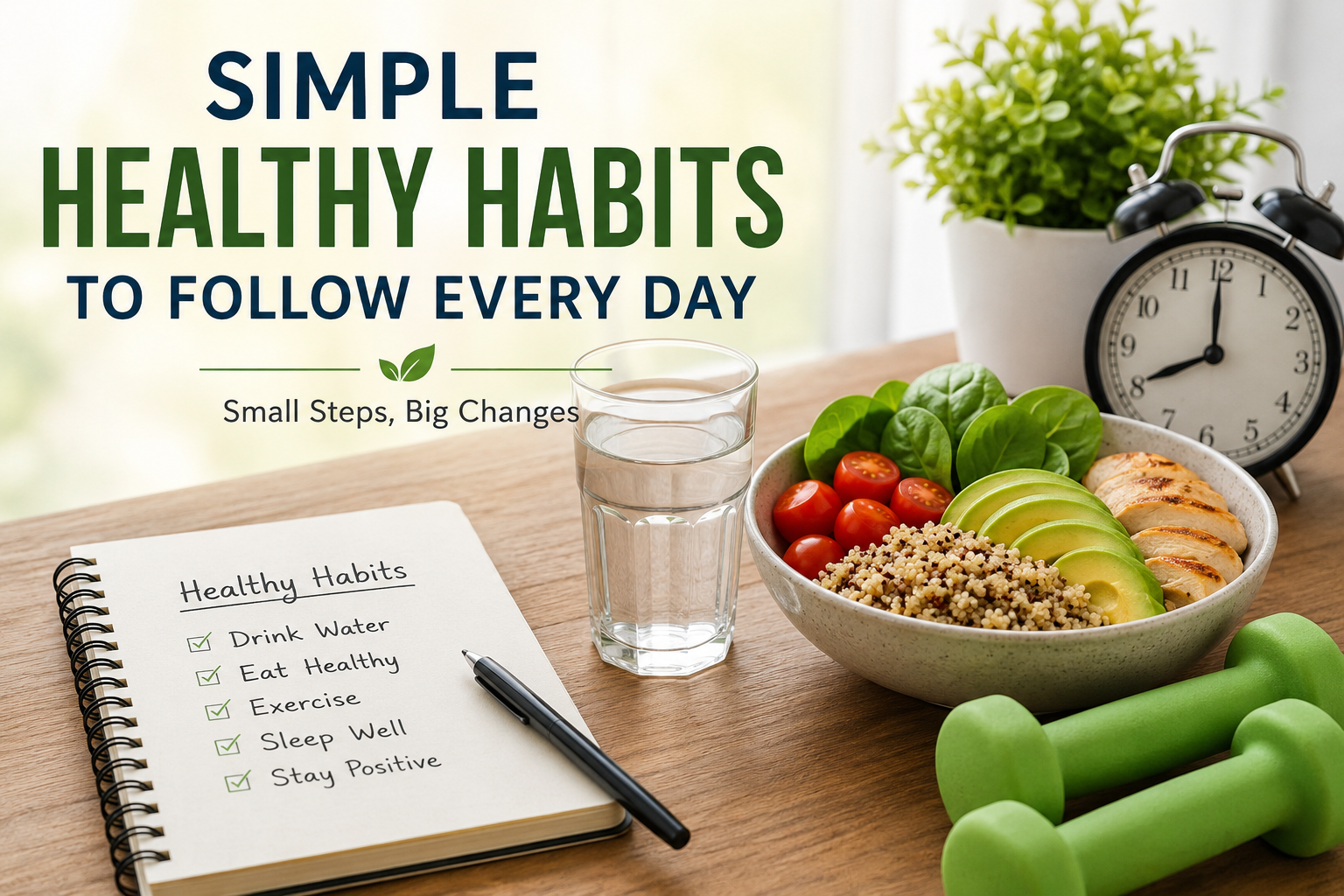
Living a healthy life does not always require a strict diet, expensive supplements, or hours at the gym. In my experience, the biggest changes often come from simple healthy habits that we can follow every day. When small positive actions become part of our normal routine, they can make a meaningful difference in how we feel, work, sleep, and enjoy our daily lives.
Many people try to change everything at once. They start a complicated diet, exercise intensely, and create a long list of rules. After a few days, the routine becomes difficult to maintain. I believe a better approach is to start with realistic healthy habits and build them slowly. The goal is not perfection. The goal is consistency.
Here are some simple healthy habits that can easily become part of your everyday routine.
Start Your Day With Water
One of the easiest healthy habits is drinking water regularly. After sleeping for several hours, your body naturally needs fluids. Starting the morning with a glass of water can be a simple way to begin the day.
I also find it helpful to keep a water bottle nearby during the day. When water is easily available, it becomes easier to remember to drink it. Instead of waiting until you feel very thirsty, make drinking water a regular part of your routine.
Water is also a better everyday choice than frequently drinking sugary beverages. You can add lemon, cucumber, or fresh mint if you prefer a little flavor.
Eat More Whole Foods
Healthy eating does not have to mean following a complicated meal plan. One of the most useful habits is simply choosing more whole and minimally processed foods.
Try including vegetables, fruits, whole grains, beans, eggs, nuts, seeds, and other nutritious foods in your meals. These foods can provide important nutrients and help make meals more satisfying.
Personally, I think it is better to focus on adding healthy foods rather than constantly thinking about what you cannot eat. Adding an extra serving of vegetables to lunch or choosing fruit as a snack can be a practical starting point.
Make Time for Daily Movement
You do not need to spend hours exercising to become more active. Daily movement can include walking, stretching, cycling, household activities, or a short workout at home.
If you have a busy schedule, even a short walk can be useful. You can walk after a meal, take the stairs when practical, or spend a few minutes stretching during breaks.
The important thing is to avoid sitting for extremely long periods whenever possible. I believe regular movement is much easier to maintain when you choose activities that you actually enjoy.
Get Enough Quality Sleep
Sleep is one of the most important healthy habits, yet it is often ignored. A busy schedule can make it tempting to stay awake late every night, but good sleep supports everyday energy and concentration.
Try to create a regular bedtime routine. Going to bed and waking up at roughly similar times can help make your schedule more consistent.
I also recommend creating a relaxing environment before bedtime. Reducing unnecessary screen time, keeping your bedroom comfortable, and avoiding stimulating activities immediately before sleep may make it easier to wind down.
Adults generally need around seven or more hours of sleep each night, although individual needs can vary.
Eat Breakfast If It Works for You
Breakfast is often described as the most important meal of the day, but everyone’s routine is different. What matters most is creating a balanced eating pattern that works for you.
If you enjoy breakfast, choose foods that provide useful nutrition and lasting satisfaction. For example, you could have eggs with whole grain toast, oatmeal with fruit and nuts, or yogurt with fruit.
The key is to avoid making breakfast unnecessarily complicated. A simple nutritious meal can be enough.
Include More Fruits and Vegetables
Fruits and vegetables are an important part of a balanced diet. They provide vitamins, minerals, fiber, and other nutrients that support overall health.
A simple habit is to add color to your plate. Try including different vegetables throughout the week and choosing different types of fruit as snacks or additions to meals.
I personally find variety makes healthy eating much easier. When meals look and taste different, eating nutritious foods does not feel boring.
Practice Mindful Eating
Many of us eat quickly while watching television, working, or using our phones. This can make it difficult to pay attention to the food we are eating.
Mindful eating means slowing down and paying attention to your meal. Notice the taste, texture, smell, and how you feel while eating.
Try putting your phone away during meals when possible. Eating more slowly can also give you more time to recognize when you are comfortably satisfied.
This habit does not mean following strict food rules. It simply encourages you to become more aware of your eating routine.
Take Short Breaks During the Day
If you spend many hours working at a desk, remember to take short breaks. Standing up, walking around, stretching, or looking away from your screen can help break up long periods of sitting.
I find short breaks especially helpful when working for several hours. They can give your mind a chance to reset and may help you return to your work with better focus.
You do not need a complicated routine. A few minutes of movement throughout the day can be a practical habit.
Spend Time Outdoors
Spending some time outdoors can be a refreshing part of your daily routine. A short walk in a park, sitting outside, gardening, or simply getting some fresh air can help you take a break from screens and indoor environments.
If your schedule is busy, try combining outdoor time with another habit. For example, you could take a short walk after lunch or in the evening.
Simple activities like these can make your daily routine feel more balanced.
Take Care of Your Mental Wellbeing
A healthy lifestyle is not only about food and exercise. Your mental wellbeing matters too.
Make time for activities that help you relax. Reading, listening to music, spending time with family, writing in a journal, practicing a hobby, or simply enjoying some quiet time can be valuable.
I believe it is also important to avoid expecting yourself to be productive every minute of the day. Rest is part of a healthy routine.
If you are dealing with persistent emotional or mental health concerns, consider speaking with a qualified healthcare professional.
Limit Unhealthy Habits
You do not have to change everything overnight. Instead, look at the habits that may be working against your goals and make gradual improvements.
For example, if you regularly drink sugary beverages, start by replacing one drink with water. If you often order fast food, try preparing one simple meal at home. If you spend most of the evening sitting, add a short walk to your routine.
Small changes are often easier to maintain than dramatic changes.
Create a Simple Daily Routine
A routine can make healthy habits easier because you do not have to make the same decisions repeatedly.
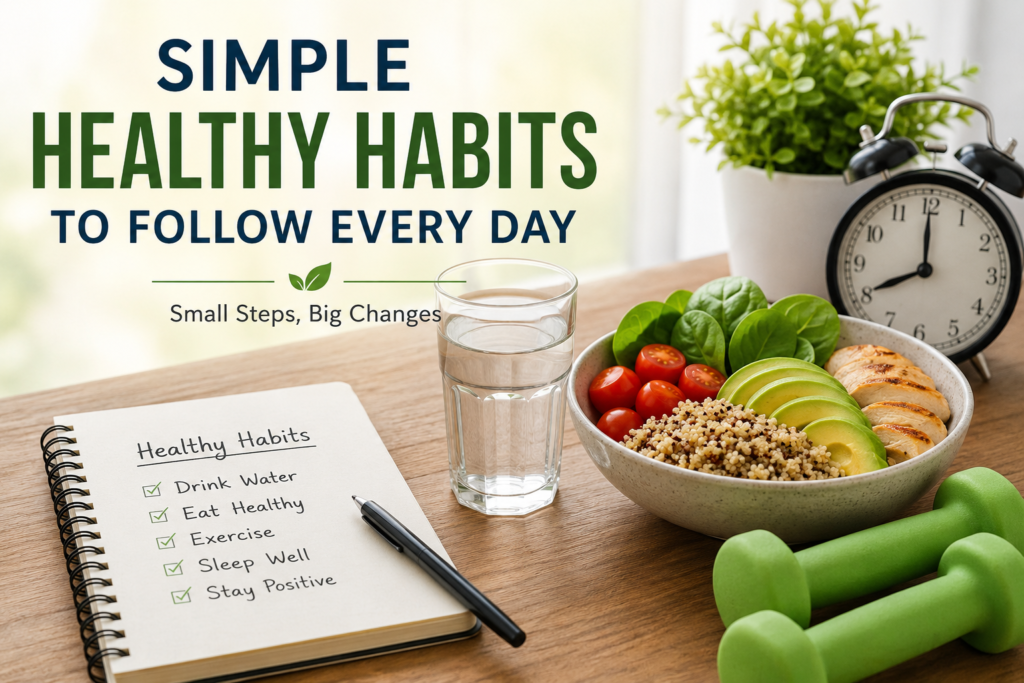
Your routine might include drinking water after waking, eating a nutritious breakfast or first meal, taking a walk, eating balanced meals, taking short movement breaks, and going to bed at a consistent time.
There is no single perfect routine for everyone. Build one around your schedule, responsibilities, preferences, and lifestyle.
Focus on Consistency Instead of Perfection
One of the most important lessons I have learned about healthy living is that missing one day does not mean you have failed.
Maybe you skip your workout because you are busy. Maybe you eat something less nutritious than planned. Maybe you stay up late one night.
That is normal.
The important thing is to return to your healthy habits the next day. Long term progress comes from what you do consistently over time, not from being perfect every single day.
Final Thoughts
Simple healthy habits can have a powerful place in everyday life. Drinking enough water, eating nutritious foods, moving regularly, getting quality sleep, spending time outdoors, taking breaks, and caring for your mental wellbeing are all practical ways to support a healthier lifestyle.
The best healthy routine is one you can actually maintain. You do not need to completely change your life in one day. Start with one or two habits, make them part of your routine, and gradually build from there.
In my opinion, healthy living becomes much easier when it feels realistic rather than restrictive. Small choices made every day can eventually become strong habits. The goal is to create a lifestyle that supports your health while still allowing you to enjoy your everyday life.
Remember that general wellness advice cannot replace personalized medical guidance. If you have a medical condition, specific dietary needs, or concerns about your health, speak with a qualified healthcare professional before making major lifestyle changes.