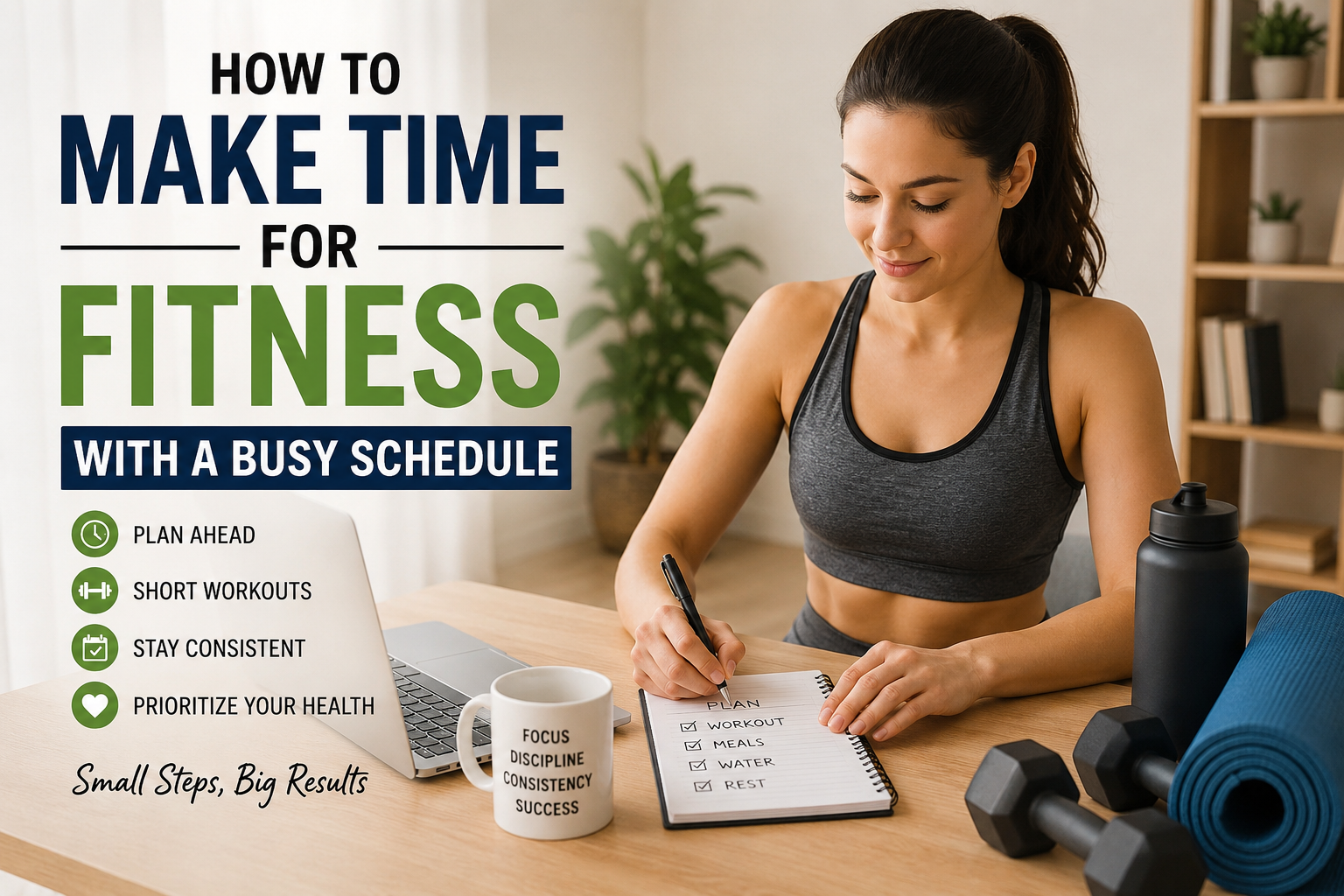
Finding time for fitness can feel difficult when life is already full of work, family responsibilities, studies, household tasks, and personal commitments. I have found that the biggest problem is often not a lack of time but a lack of planning. When fitness is treated as something I will do only when I have free time, it is easy to keep postponing it. However, when I make exercise a regular part of my schedule, it becomes much easier to stay active.
A busy schedule does not mean that fitness has to be ignored. Even a short workout can be useful when it is done consistently. I believe that fitness should fit into daily life rather than make life more stressful. With a few simple changes, anyone can make time for exercise and build a healthier routine.
Why Fitness Matters When You Have a Busy Schedule
When life becomes busy, exercise is often one of the first things people remove from their schedule. I used to think that missing a workout was not a big problem, but skipping exercise regularly can make it harder to maintain energy and motivation.
Regular physical activity can support overall health, improve mood, increase energy, and help the body stay strong. Exercise can also provide a useful break from work and other responsibilities. Even a short walk can help me clear my mind after spending a long time working.
The goal is not to spend hours in a gym every day. The real goal is to create a fitness routine that is realistic enough to continue.
Start by Looking at Your Daily Schedule
Before trying to make more time for fitness, I recommend looking honestly at how you spend your day. Many people feel busy from morning until night, but there may be small periods of free time that are being used for activities that are not very important.
I like to look at my daily routine and identify the times when I am usually free. This could be early in the morning, during a lunch break, after work, or in the evening.
Once I know where my free time is, I can choose a realistic workout time. There is no perfect time for everyone. The best workout time is the time that fits naturally into my routine.
Set Realistic Fitness Goals
One common mistake is setting fitness goals that require too much time. If I decide that I need to exercise for one hour every day, I may quickly lose motivation when my schedule becomes busy.
Instead, I prefer to start with smaller goals. A twenty minute workout can be much easier to complete than a one hour workout. Once the habit becomes stronger, I can increase the duration if my schedule allows.
For example, my weekly fitness goal could include three short strength workouts, two walks, and some simple stretching. This type of plan is much easier to manage than trying to exercise intensely every day.
Use Short Workouts
Short workouts are one of the easiest ways to make time for fitness with a busy schedule. I do not always need a long workout to stay active.
A fifteen or twenty minute workout can include bodyweight exercises, squats, lunges, push ups, planks, and simple movements that work different parts of the body. The exact exercises can be adjusted according to fitness level and personal goals.
If I have only ten minutes available, I can still use that time for movement. The important thing is to avoid thinking that a workout is only valuable when it lasts a long time.
Small workouts performed consistently can become an important part of a healthy lifestyle.
Schedule Exercise Like an Important Appointment
One of the most useful changes I can make is to put exercise on my calendar. When a workout has a specific time, I am more likely to complete it.
Instead of saying that I will exercise sometime today, I can choose a specific time. For example, I might decide to walk after breakfast or complete a home workout after finishing work.
Treating exercise as an appointment also helps me avoid filling that time with less important activities. Once fitness becomes part of my normal schedule, it feels less like an extra task.
Wake Up a Little Earlier
For some people, morning exercise can be a practical solution. If my evenings are usually busy, waking up slightly earlier may give me enough time for a short workout or walk.
I do not think it is necessary to wake up extremely early. Even twenty or thirty minutes can be useful. The key is making sure that getting up earlier does not reduce the amount of sleep I need.
A simple morning routine might include stretching, walking, bodyweight exercises, or a short workout at home. Starting the day with physical activity can also create a positive feeling that carries into the rest of the day.
Make Your Lunch Break Active
A lunch break can provide another opportunity to move. If I have enough time, I can take a short walk instead of sitting throughout the entire break.
Walking after a meal can help me become more active without requiring a separate workout session. I can also use part of my break for stretching or simple mobility exercises if my environment allows it.
These small changes are especially helpful for people who spend many hours sitting at a desk.
Exercise at Home
Going to a gym is not always practical for someone with a busy schedule. Traveling to the gym, changing clothes, and preparing for the workout can add extra time.
Home workouts can remove some of these barriers. I can exercise in a small space with little or no equipment. A yoga mat, resistance bands, or a pair of light weights can be useful, but they are not always necessary.
Having a simple workout area at home can make it easier to start exercising immediately. When the workout location is close, I have fewer reasons to postpone it.
Combine Fitness With Daily Activities
Another approach I find useful is combining exercise with activities that I already do. Fitness does not always have to be a separate session.
For example, I can walk while making a phone call, take the stairs when possible, walk to nearby places, or spend a few minutes stretching after long periods of sitting.
These activities may seem small, but they can increase daily movement. When combined with planned workouts, they can help create a more active lifestyle.
Reduce Unnecessary Screen Time
Sometimes the time I need for exercise is hidden inside my daily screen time. Social media, videos, and entertainment can easily take up more time than expected.
I am not suggesting that entertainment should be removed completely. Instead, I believe it is helpful to create a balance.
If I reduce unnecessary scrolling by twenty minutes, I can use that time for walking, stretching, or a quick workout. This simple change can make fitness feel much more achievable.
Prepare for Your Workout in Advance
Preparation can make exercise easier when the schedule is busy. I like to prepare workout clothes and other items before the workout time.
If I plan to exercise in the morning, keeping my clothes ready the night before can remove one small barrier. If I plan to exercise after work, having everything prepared can make the transition faster.
The fewer decisions I have to make before exercising, the easier it becomes to start.
Learn to Say No to Some Things
Making time for fitness sometimes requires setting boundaries. There are days when I may have many invitations, tasks, or activities competing for my attention.
Not every activity is equally important. If fitness is one of my priorities, I need to protect some time for it.
This does not mean ignoring responsibilities. It means understanding what deserves my time and what can wait. When I become more careful about my schedule, I often discover that I have more control over my time than I thought.
Do Not Aim for Perfection
I believe one of the most important fitness lessons is that missing one workout does not mean the entire routine has failed.
Busy schedules are unpredictable. There will be days when work takes longer, family responsibilities appear, or I simply need more rest.
Instead of giving up after missing a workout, I can return to my routine the next day. Consistency does not mean being perfect every day. It means continuing to make healthy choices over the long term.
Make Fitness Enjoyable
If exercise feels like punishment, it can become difficult to maintain. I find it easier to stay active when I choose activities that I actually enjoy.
Some people enjoy walking, while others prefer cycling, dancing, strength training, yoga, swimming, or sports. There is no single exercise that everyone has to follow.
Finding an enjoyable activity can make fitness feel less like a responsibility and more like something I look forward to.
Create a Simple Weekly Fitness Routine
A simple weekly routine can make busy schedules easier to manage. For example, I might choose three days for short strength workouts and two days for walking.
Monday can be a strength workout. Tuesday can include a short walk. Wednesday can be a rest day or light stretching. Thursday can be another workout. Friday can include walking. The weekend can be used for a longer activity or recovery.
The exact schedule is not important. What matters is choosing something realistic and repeating it.
Final Thoughts
Making time for fitness with a busy schedule is possible when I stop waiting for free time and start making fitness a priority. I do not need a perfect schedule, expensive equipment, or hours at the gym.
Short workouts, home exercise, walking, planned workout times, and better time management can all help me stay active. The most important thing is finding a routine that fits my lifestyle.
From my point of view, consistency is much more valuable than trying to do too much at once. A twenty minute workout that I complete regularly is better than a long workout that I keep postponing.
When I make small changes and stay patient, fitness can become a natural part of my daily life. A busy schedule may limit my available time, but it does not have to stop me from taking care of my health. The key is to start small, plan ahead, stay consistent, and remember that every active moment counts.