When I finish a workout, I often feel like the hard part is over and I can immediately move on with my day. However, I have learned that the few minutes after exercise can be just as important as the workout itself. A proper cool down gives my body time to gradually return to its normal state and helps me feel more comfortable afterward.
If you are wondering how to cool down after a workout, the good news is that it does not need to be complicated. A simple combination of light movement, gentle stretching, hydration, and controlled breathing can make a noticeable difference in how you feel after exercise.
Why Is a Cool Down Important?
During exercise, your heart rate increases, your breathing becomes faster, and your muscles work harder. Suddenly stopping after an intense workout can make the transition back to rest feel uncomfortable.
A cool down allows you to reduce your activity gradually instead of stopping immediately. In my experience, taking even five to ten minutes to cool down makes the end of a workout feel much smoother.
A proper cool down can also help you relax mentally. After a busy or stressful day, those quiet minutes after exercise can give you a chance to slow down and focus on your breathing.
Start With Light Movement
The first step in a good post workout cool down is to reduce the intensity gradually.
If you have been running, slow down to a jog and then walk. If you have been cycling quickly, reduce your speed for several minutes before stopping. After strength training, you can walk around slowly and gently move the muscles you have been using.
I prefer keeping this part simple. There is no need to turn your cool down into another workout. The goal is simply to let your body transition from exercise to rest.
Five minutes of easy movement is often enough for a normal workout. After a particularly intense session, you may want to spend a little longer cooling down.
Focus on Your Breathing
Once you have reduced your movement, pay attention to your breathing.
During exercise, your breathing naturally becomes faster. As your activity level decreases, try to take slower and more comfortable breaths.
I find it helpful to breathe through my nose when it feels comfortable and take relaxed breaths without forcing them. The goal is not to perform complicated breathing exercises. It is simply to allow your breathing to settle naturally.
You can stand or sit comfortably while taking several slow breaths. This can also make the end of your workout feel more peaceful.
Add Gentle Stretching
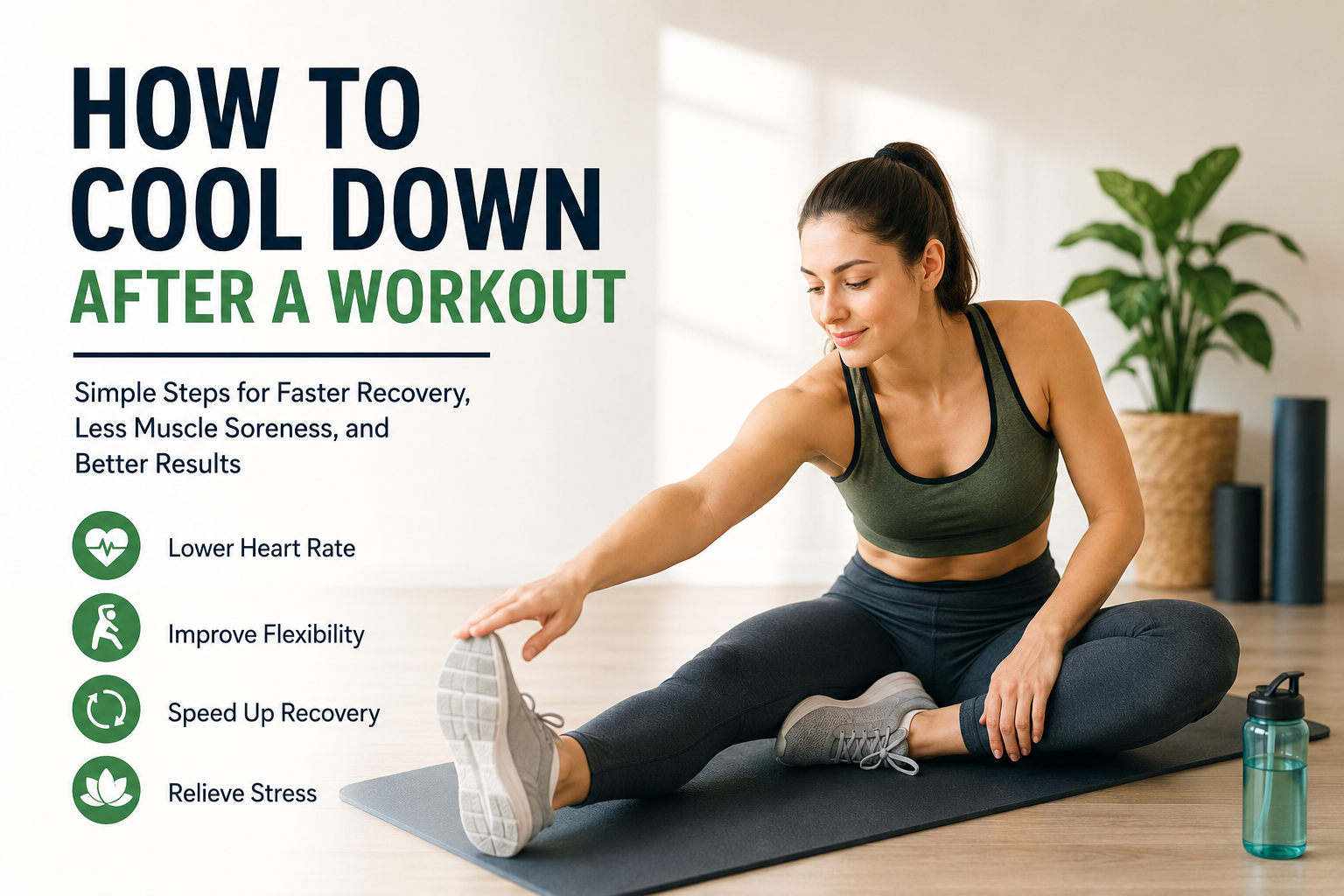
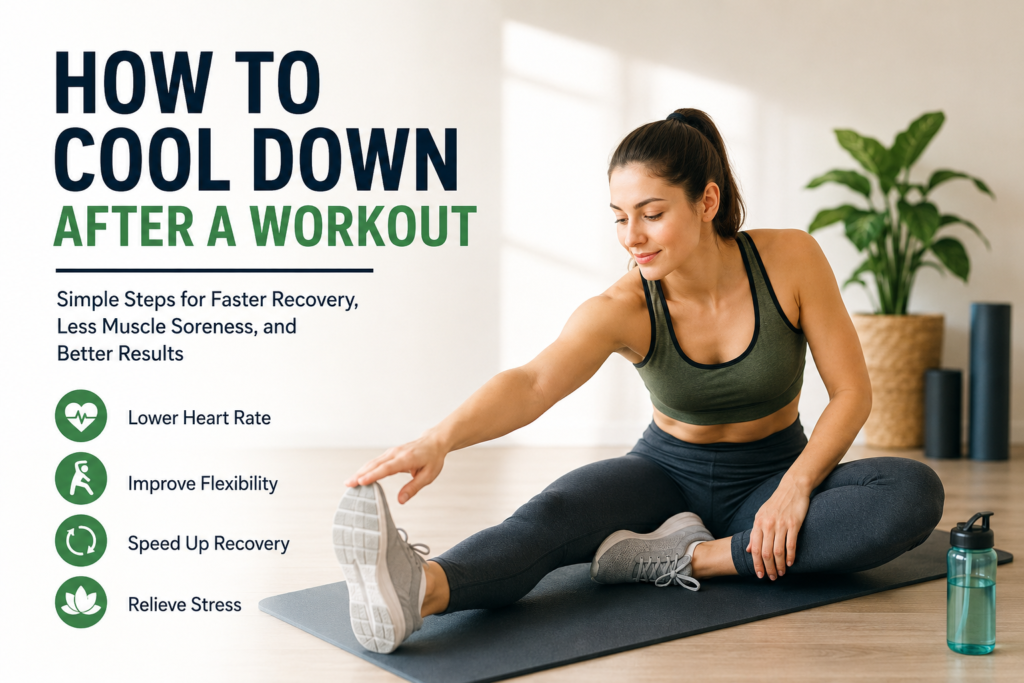
Gentle stretching is another useful part of a cool down after exercise. Instead of forcing your body into deep stretches, focus on comfortable movements.
For example, after a lower body workout, you might gently stretch your calves, thighs, and hips. After an upper body workout, you can focus on your shoulders, chest, arms, and upper back.
Hold each comfortable stretch for around 15 to 30 seconds and avoid bouncing. You should feel a mild stretch rather than sharp pain.
One mistake I try to avoid is treating stretching like a competition. You do not need to stretch as far as possible. A relaxed and controlled approach is usually much more comfortable.
Do Not Forget Hydration
Replacing fluids after exercise is an important part of recovery. You lose water through sweat, especially when exercising in warm conditions.
I usually keep water nearby during and after my workout so that drinking becomes an easy habit. Instead of waiting until I feel extremely thirsty, I take regular drinks throughout the day.
For shorter and less intense workouts, plain water is often a simple choice. After longer or very sweaty sessions, your individual hydration needs may be different.
The amount of fluid you need depends on factors such as exercise intensity, weather, body size, and how much you sweat. The important thing is to pay attention to your body and replace fluids regularly.
Give Your Body Time to Relax
A cool down is not only about physical movement. It can also be a useful transition between exercise and the rest of your day.
After finishing my workout, I like to spend a few quiet minutes before rushing into another task. This can mean sitting comfortably, drinking water, taking a shower, or simply walking around slowly.
This small habit can make exercise feel less like something I have to finish quickly and more like a complete part of my daily routine.
What About Foam Rolling?
Some people enjoy foam rolling after exercise. It involves using a foam roller to apply pressure to different areas of the body.
Foam rolling can feel relaxing, especially after a demanding workout. However, I would not consider it an essential part of every cool down.
If you enjoy it and it feels comfortable, you can include a few minutes of gentle foam rolling after your workout. Avoid putting excessive pressure on painful areas or areas that may be injured.
The most important parts of a basic cool down are still simple movement, comfortable breathing, hydration, and appropriate recovery.
Eat a Balanced Meal or Snack
Cooling down is only one part of recovering from exercise. Nutrition also matters, especially if you train regularly.
After a workout, a balanced meal or snack containing protein and carbohydrates can support your body’s recovery needs.
Protein provides amino acids that your body uses for muscle repair, while carbohydrates help replenish energy stores. You do not necessarily need an expensive recovery product. Normal foods can work well as part of a balanced diet.
For example, you might choose yogurt with fruit, eggs with whole grain toast, a balanced rice and chicken meal, or another combination that fits your normal eating habits.
Avoid Stopping Completely After Intense Exercise
One of the most common mistakes is finishing an intense workout and immediately sitting or lying down.
If your workout was demanding, give yourself a few minutes of easy movement first. Walking slowly around the room, gym, or outdoor area can be an easy way to transition.
This does not mean that stopping suddenly is dangerous for everyone. Rather, a gradual reduction in activity can simply make the transition more comfortable, particularly after vigorous exercise.
A Simple Five Minute Cool Down Routine
If you are short on time, you can still create an effective cool down routine after workout.
Start with two minutes of very easy walking. Allow your breathing and heart rate to gradually settle.
Next, spend one minute gently moving your shoulders, arms, hips, and ankles.
Then spend another minute performing comfortable stretches for the main muscle groups you used during exercise.
Finally, take the last minute to breathe slowly, drink some water, and relax.
This simple routine is easy to remember and can become a natural part of your exercise habit.
Cool Down Based on Your Workout
Your cool down does not have to look the same every day.
After running, walking for several minutes is a natural way to reduce intensity. You can then stretch your calves, thighs, and hips.
After strength training, gentle movements and stretches for the muscles you trained may feel more appropriate.
After cycling, easy pedaling followed by gentle leg stretches can work well.
After a home workout, you can simply walk around the room before moving into a few comfortable stretches.
The best cool down is one that matches your workout and feels manageable enough to do consistently.
Listen to Your Body
Learning how to cool down after a workout also means learning to pay attention to how you feel.
Normal tiredness after exercise is expected. However, unusual symptoms such as severe chest pain, fainting, serious difficulty breathing, or intense pain should not be ignored. If something feels seriously wrong, stop exercising and seek appropriate medical attention.
You should also avoid stretching through sharp or worsening pain. A cool down should leave you feeling more relaxed, not more uncomfortable.
Common Cool Down Mistakes
There are a few mistakes that can make your cool down less useful.
The first is skipping it completely. When you are busy, it is tempting to finish your final exercise and move straight to the shower. Even a few minutes of easy movement can be a better habit.
Another mistake is stretching too aggressively. Stretching should be controlled and comfortable.
Some people also forget to drink enough fluids after exercising. Keeping a water bottle nearby makes this easier.
Finally, do not think that a longer cool down is automatically better. A short, consistent routine can be more practical than an elaborate routine that you rarely follow.
Final Thoughts
For me, the best cool down after a workout is simple enough to become a habit. I do not think you need a complicated routine or expensive equipment. A few minutes of light movement, gentle stretching, relaxed breathing, and proper hydration can help you make a smoother transition from exercise to rest.
The most important thing is consistency. Once cooling down becomes part of your normal workout routine, you no longer have to think much about it.
Exercise is not just about how hard you work during the workout. Recovery is also part of the process. By giving your body a few extra minutes to slow down, relax, and recover, you can make your overall fitness routine feel more comfortable and sustainable.
If you are a beginner, start with a simple five minute cool down and adjust it based on how your body feels. Over time, you will learn which movements and habits work best for you.
A good workout deserves a good finish, and taking a few minutes to cool down is one of the easiest ways to make that happen.